A lot of fellow tourists ask “where to stay in Venice?” as they plan their trip over to Venice, Italy. We all know the complexity.
If you travel to Venice for the first time, you don’t know the way around, but you wish for the suitable place where you sleep tightly at night.
As an experienced tourist in Venice, I have compiled this Districts guide in hope of assisting you as you read up on what each Sestiere has to offer in Venice.
Now to the guide..
Sesti.. What?
You may have heard Sestiere be said as you look for any information about Venice. But what is this Sestieri about?
In the local lingo, it simply means district. Sestieri is the plural form of Sestiere (district).
In Venice there are in total six Sestieri (districts) over the artificial island. Each district has the distinct ambience that the others don’t embody – this guide will dive into this.
So please keep reading.
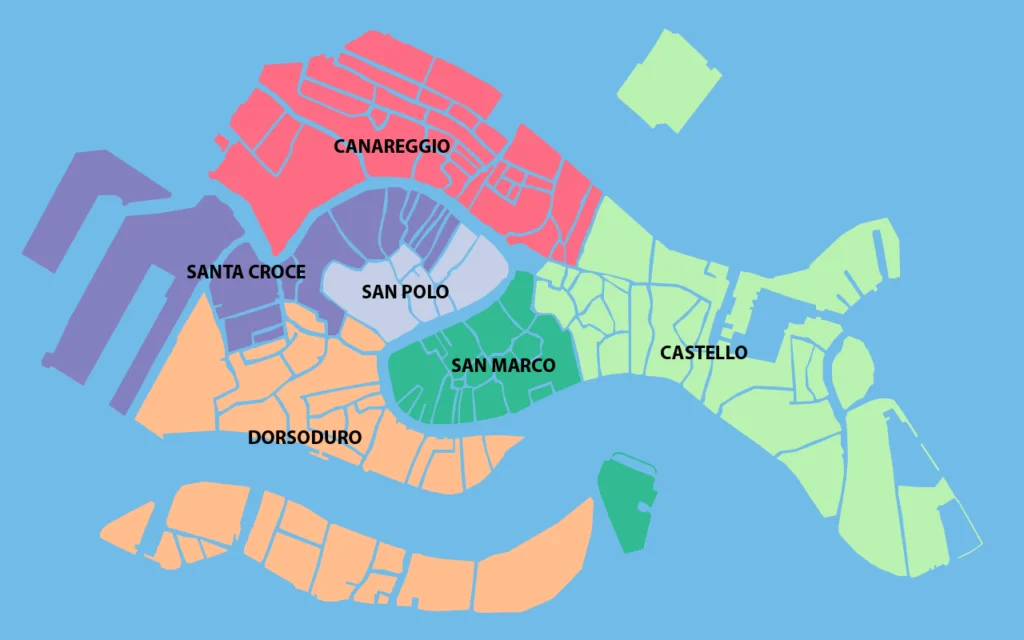
Sestieri map with colours – Photo: munav.it
Canareggio
We as tourists most likely arrive at Piazzale Roma – right in Cannaregio, which is the gateway to Venice and has the transportation depot that connects Venice to the mainland.
If you arrive in Venice by train, the railway station Venezia Santa Lucia is also located in Cannaregio. What does all this mean?
Canareggio’s convenient location to public transport makes you probably want to stay there. If you ever try to drive in to Venice, most of the the parking lots are also in Canareggio.
Please don’t drive beyond Piazzale Roma or ask the driveway to Piazza San Marco. Probably 98% of Venice is car-free area which prohibits you from driving there at all. Even a bicycle isn’t allowed there.
Anyway, despite the proximity to everything, you may also find a reasonable hotel and B&Bs in Canareggio. Just book ones away from the main road where all the signages are (see the map below).
Staying away from the always-busy-main road, you will get to relax and make yourself comfortable in your room. If you need anything, shops (on the main road) should be just a few minutes walk from your accommodation.
You get to visit not only public transportation hubs but also (off-beaten) path places in Canareggio. Those are Ghetto of Venice, Chiesa degli Scalzi and its beautiful garden, Tre Archi bridge, Teatro Italia (yes, that theatrical supermarket) and more.
If you follow the signage all the way down to Rialto and Piazza San Marco, it will take you only half an hour to get there.
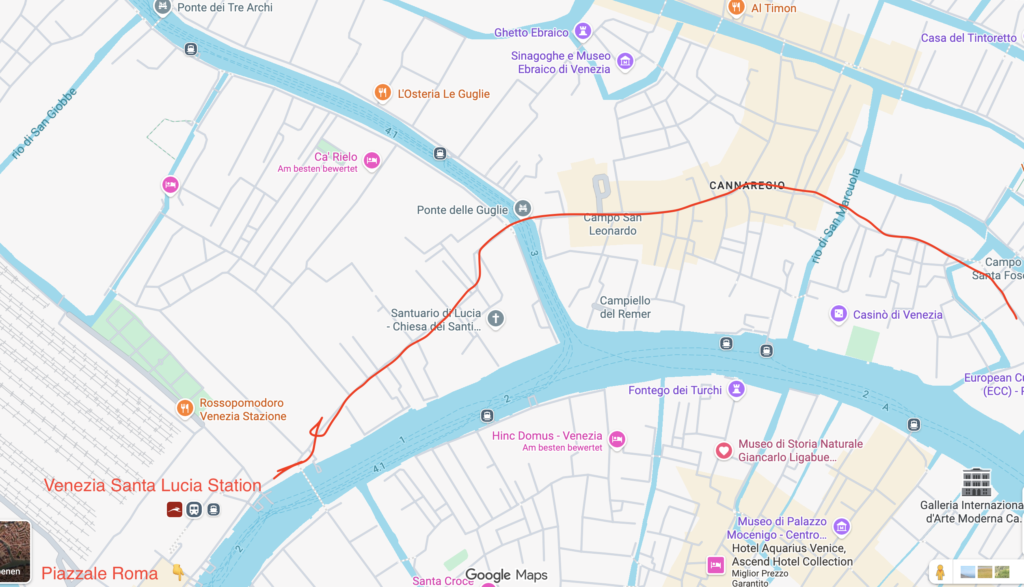
I suggest looking for accommodation NOT around the red markings in the above photo. Alongside that area prices are quite-rip-off for everything. Stay there probably a few blocks away from the red and get the better offer.
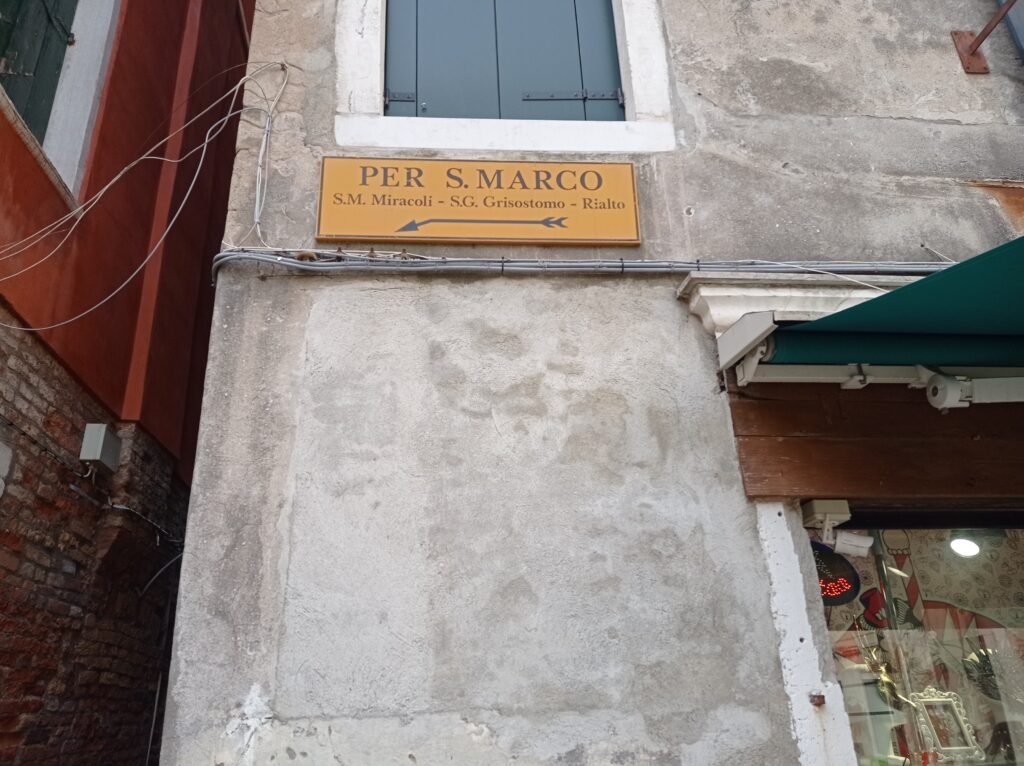
By signage I mean this kind of yellow signboards that point to Venice’s major landmarks – Rialto Bridge, Ferrovia (Venezia Santa Lucia railway station), Piazza San Marco, Piazzale Roma and Accademia Bridge (and more). The red area in the above photo has a lot of these.
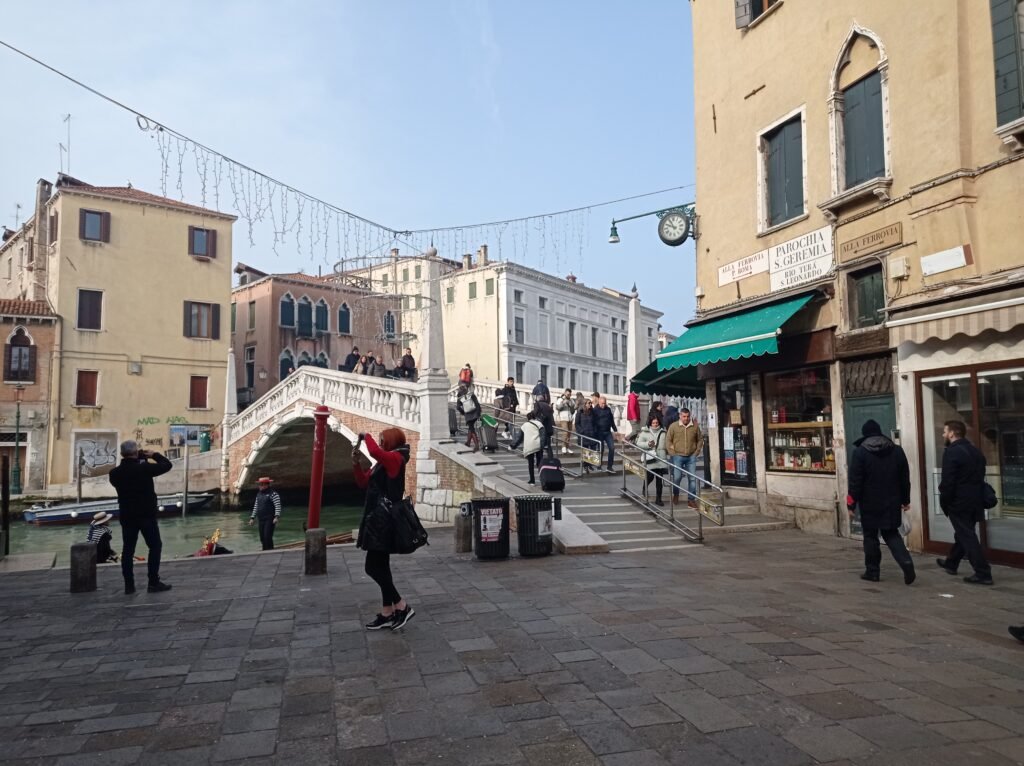
This is the crowded main path in Canareggio. On right, the yellow signage points to Ferrovia (the railway station of Venezia Santa Lucia).
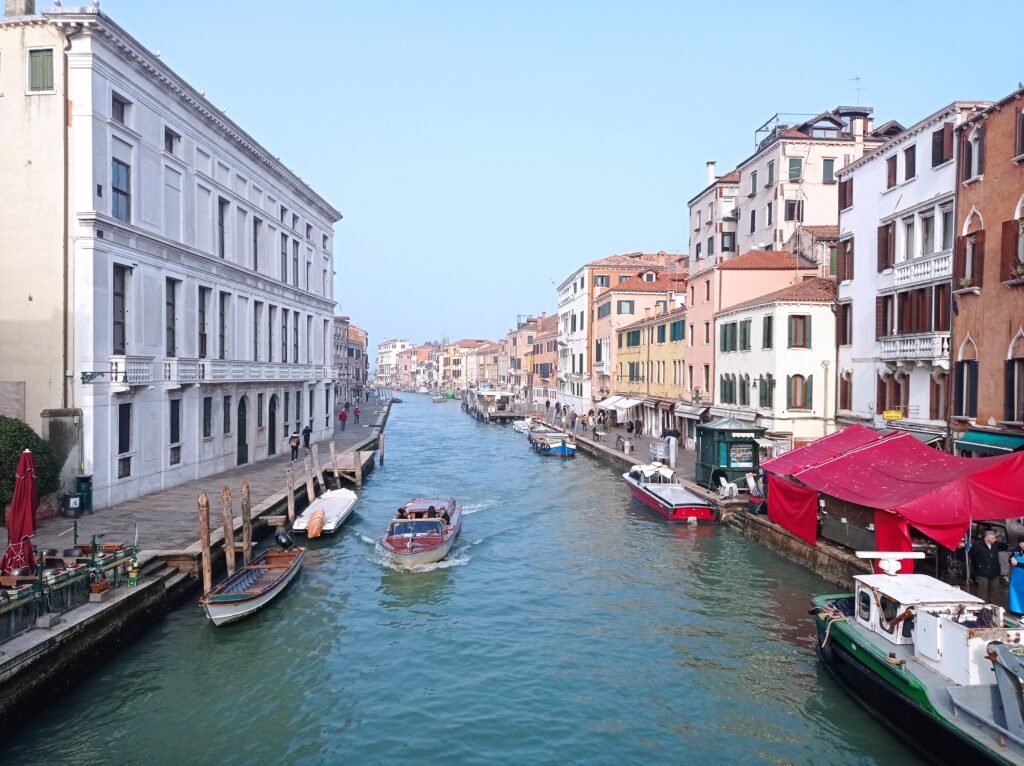
And this is the quiet Canareggio – who told you Venice is always crowded? Just venture into narrow alleyways away from the shopping street. You never know what awaits before your eyes.
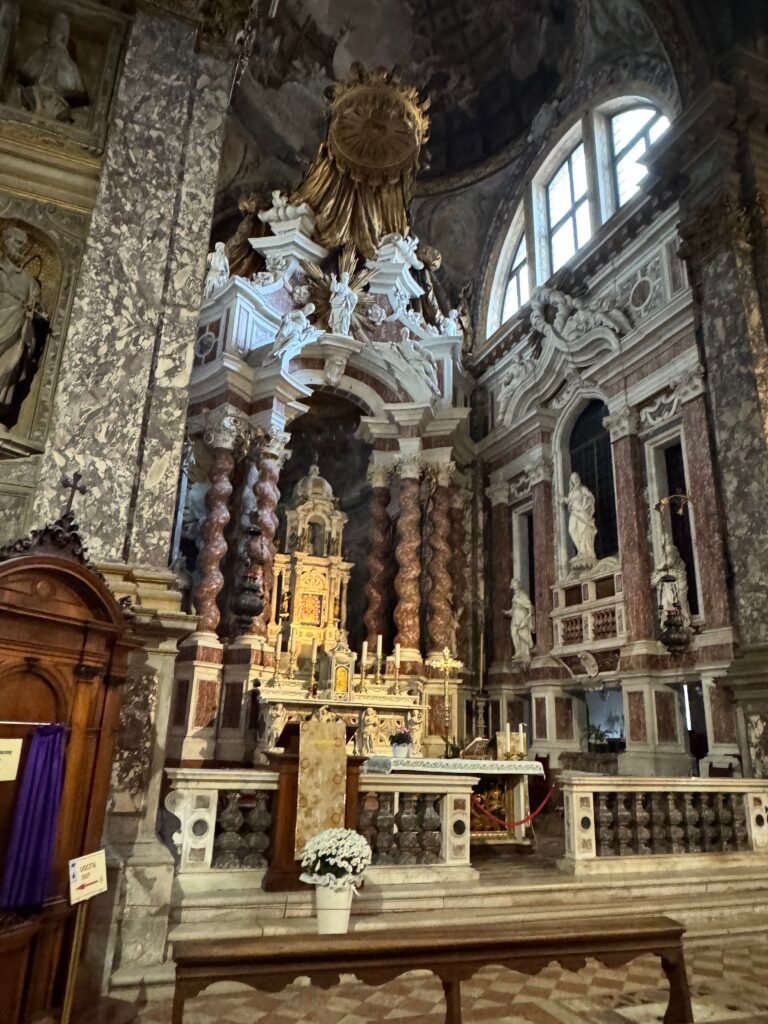
Chiesa degli Scalzi
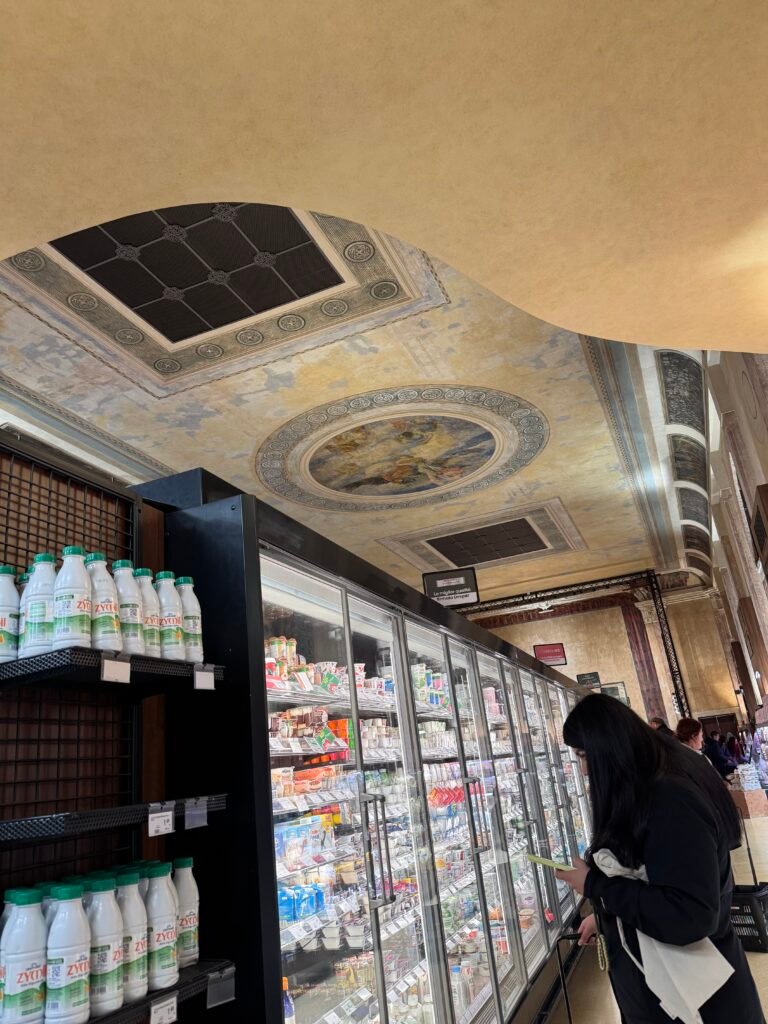
Wonder if you’ve wanted to do grocery shopping somewhere that you had dreamt? In Venice you can just do that at Teatro Italia!
Santa Croce
Being like a small sister to Canareggio, Santa Croce is also in a proximity to all the transaportation stops and shops in Canareggio. Santa Croce has more residential buildings and museum complexes, making this area much quieter than Canareggio.
If you wanted your accommodation close to everything but to avoid noise at night, Santa Croce might be your best bet.
Points of interest in Santa Croce are Giardino Papadopoli, Fontego dei Turchi (a Veneto-Byzantine building which is now a natural scientific museum of Venice), Palazzo Mocenigo (A museum for all about textile, perfume and fashion), and a lot of churches including Church Saint Nicola of Tolentino.
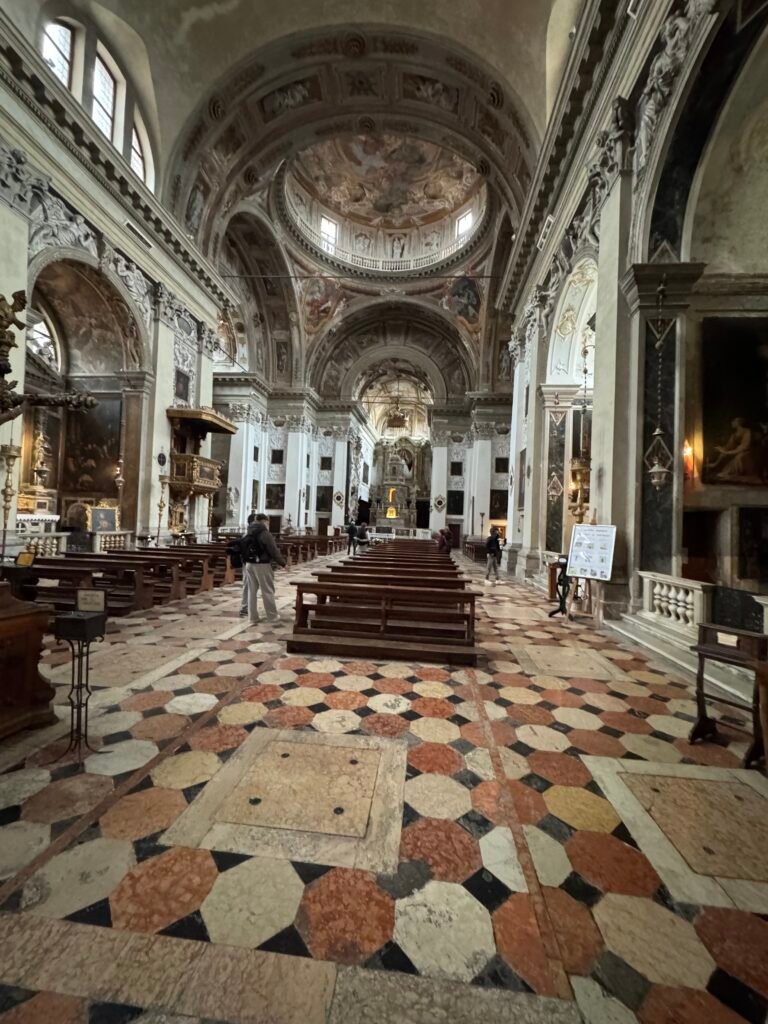
Church of Saint Nicola Di Tolentino
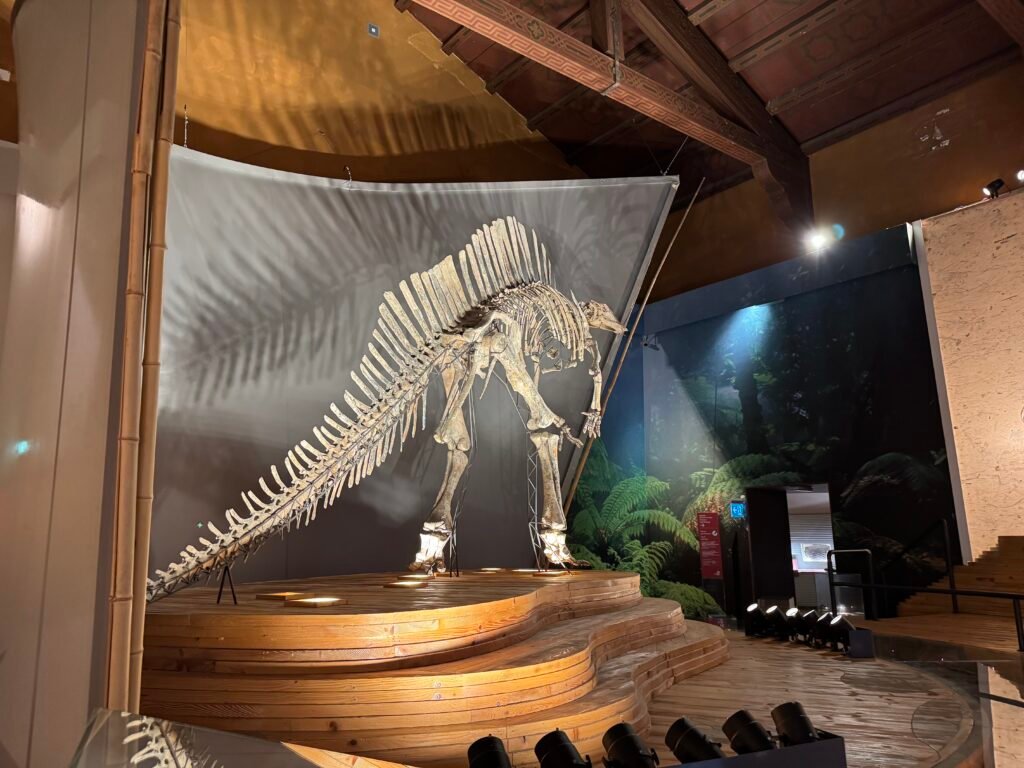
Meet a Dino at heart of Venice – at Fontego dei Turchi!
Dorsoduro
Located just a stone’s throw from Santa Croce, Dorsoduro is a hidden gem of Venice—worlds away from San Marco, which often feels like the quintessential tourist trap and the Venice people imagine before they arrive.
Dorsoduro, by contrast, has the soul of a student neighbourhood. It’s dotted with hippy bars, relaxed cafés, and affordable food spots, alongside plenty of places worth sightseeing. Campo Santa Margherita is the heart of it all, buzzing with students, tourists, and locals alike who come to dine, drink, and browse vintage bookshops.
Situated just a few minutes’ stroll from Campo Santa Margherita, the San Margherita Canal Market offers fresh produce delivered by boat in the mornings (!). Have you ever seen a market on a canal like this anywhere else? I bet not 🙂
The Accademia Bridge is one of Venice’s major bridges and one of the few with dedicated signage. It also doubles as a popular viewpoint for tourists and social media influencers. Just a few minutes’ walk away lies Campo Santo Stefano, one of the largest squares in Venice, surrounded by conservatories, museums, opulent bars, and elegant shops.
As you leave the campos behind and wander through the narrow alleys of Dorsoduro, Venice’s only surviving boatyard—Squero di San Trovaso—suddenly comes into view. Gondolas have been built here since the 16th century, and visitors can peer through the fence to see boats stacked along the shore.
The Peggy Guggenheim Museum is also located in Dorsoduro. It was opened by Peggy Guggenheim herself, whose father went down with the Titanic. She lived in the palazzo for many years and passed away there, making the museum both a cultural landmark and a deeply personal space.
The Giudecca Island, often associated with Dorsoduro, is accessible via several vaporetto stops and sees far fewer tourists. One of its most notable landmarks is the Church of the Redentore, famous for the annual Festa del Redentore, dedicated to sailors and fishers. Nearby, a former guildhall has been renovated and reopened as the Generator Hostel. While a bunk bed in a shared room now costs around €60 per night, the interior still reflects its past life as a historic guildhouse.
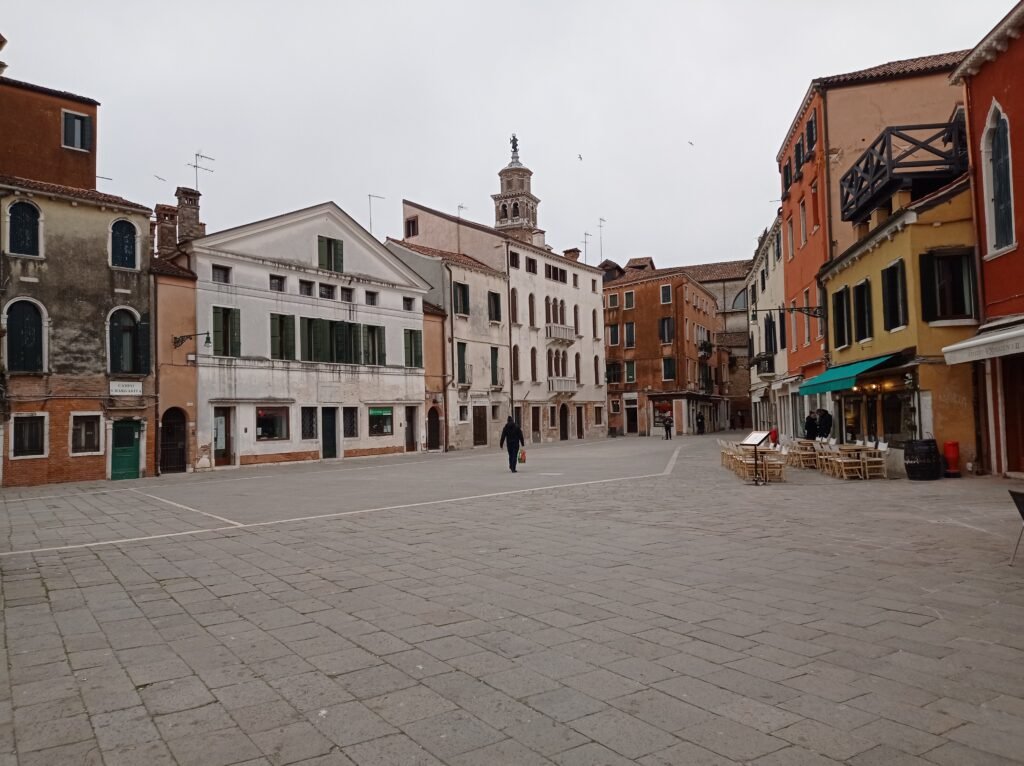
Campo Santa Margherita
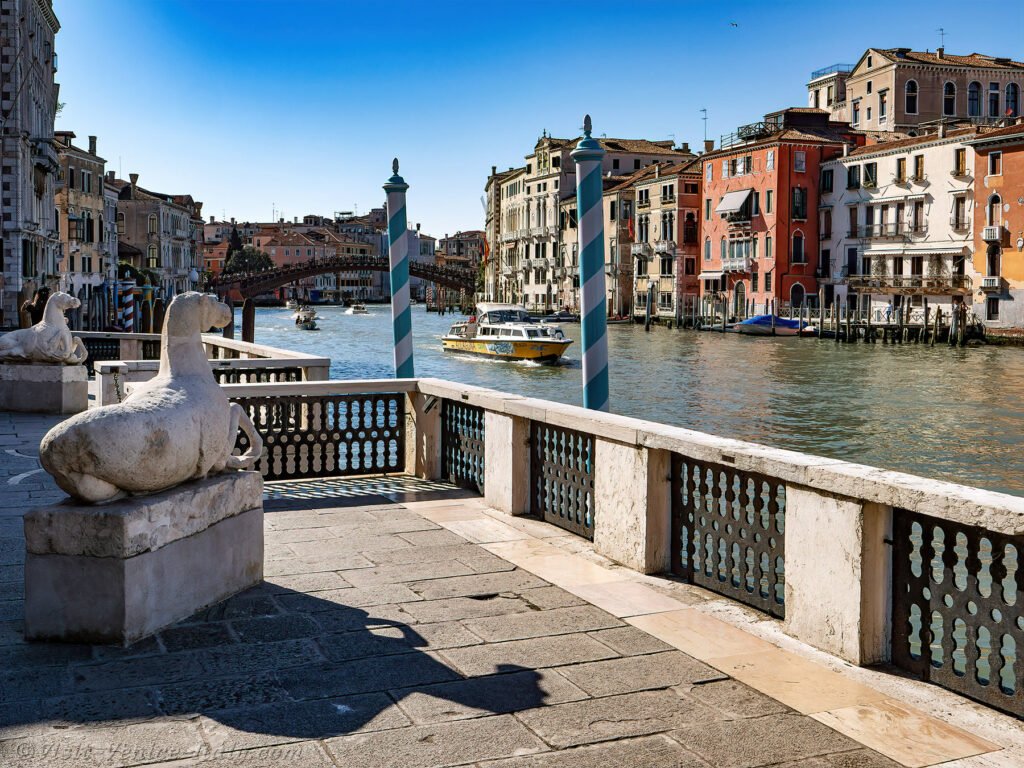
A canal view from Peggy Guggenheim Museum Venice Photo: visit-venice-italy.com
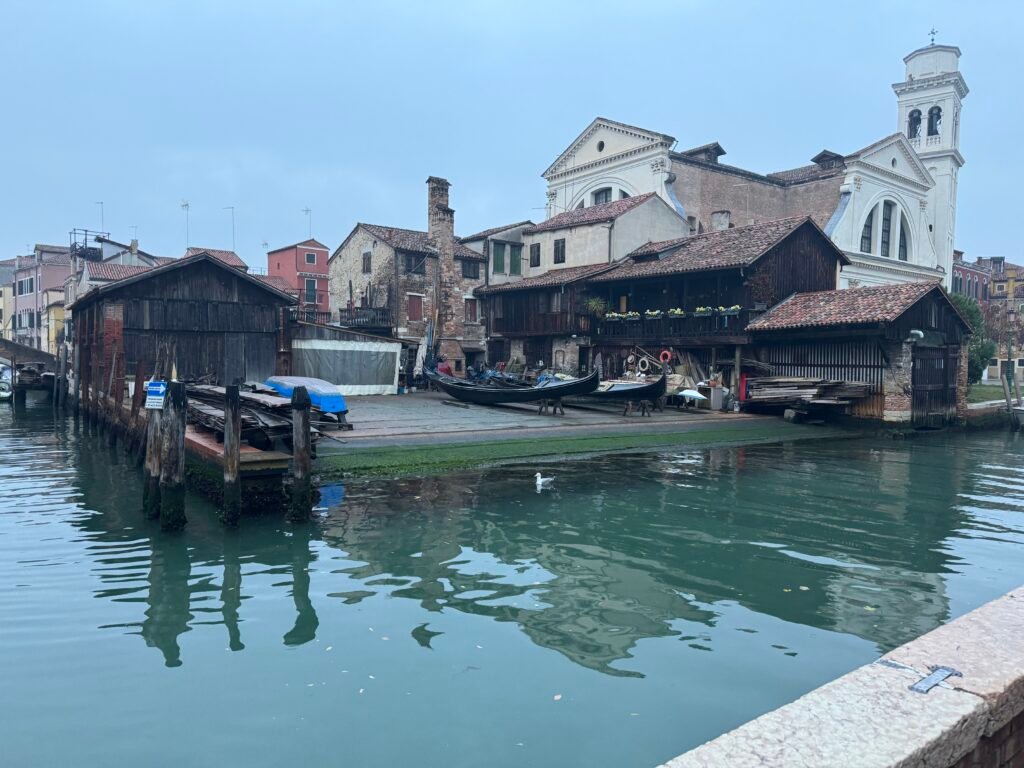
Squero di San Trovaso
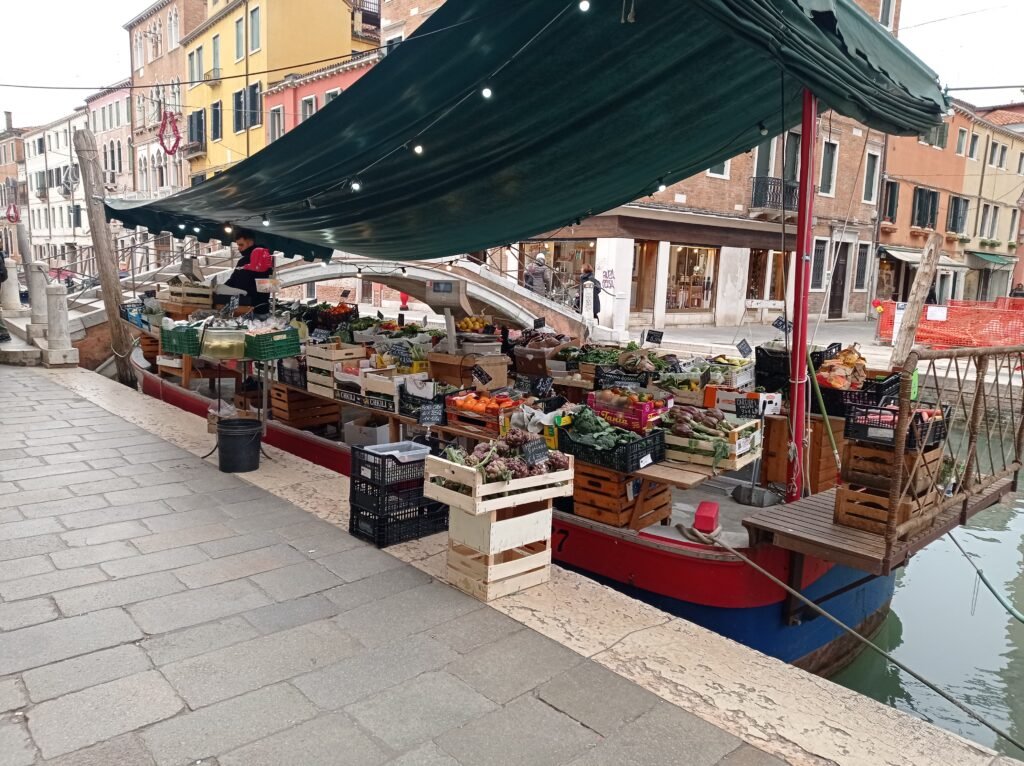
Canal Market at San Margherita
San Polo
Home to one of Venice’s “big three” landmarks — the Rialto Bridge — San Polo is undeniably touristy, much like San Marco. That said, it still offers quieter corners and plenty of hidden gems if you know where to look.
One tip upfront: avoid the Rialto Bridge from early morning until late at night unless you’re prepared to battle crowds. Instead, explore other highlights in San Polo, such as the Scuola Grande di San Rocco and the magnificent Basilica dei Frari — both far more rewarding and far less hectic.
If you’d still like to admire the Rialto Bridge without the shoulder-to-shoulder experience, head to the Rialto Market. Just a two-minute walk from the bridge, it offers a wonderful glimpse into local life, with stalls selling fresh regional produce and seafood.
Looking for traces of Leonardo da Vinci in Venice? Step out of the Scuola Grande di San Rocco and cross over to the Leonardo da Vinci Museum of Venice, where visitors of all ages can enjoy interactive displays of his inventions and discoveries.
My personal favourite spot in the area is Campo San Polo, named after the San Polo sestiere itself. It’s perfect for a laid-back stroll with relatively few tourists — and if you need to restock snacks or essentials, there’s a conveniently located Coop supermarket nearby.
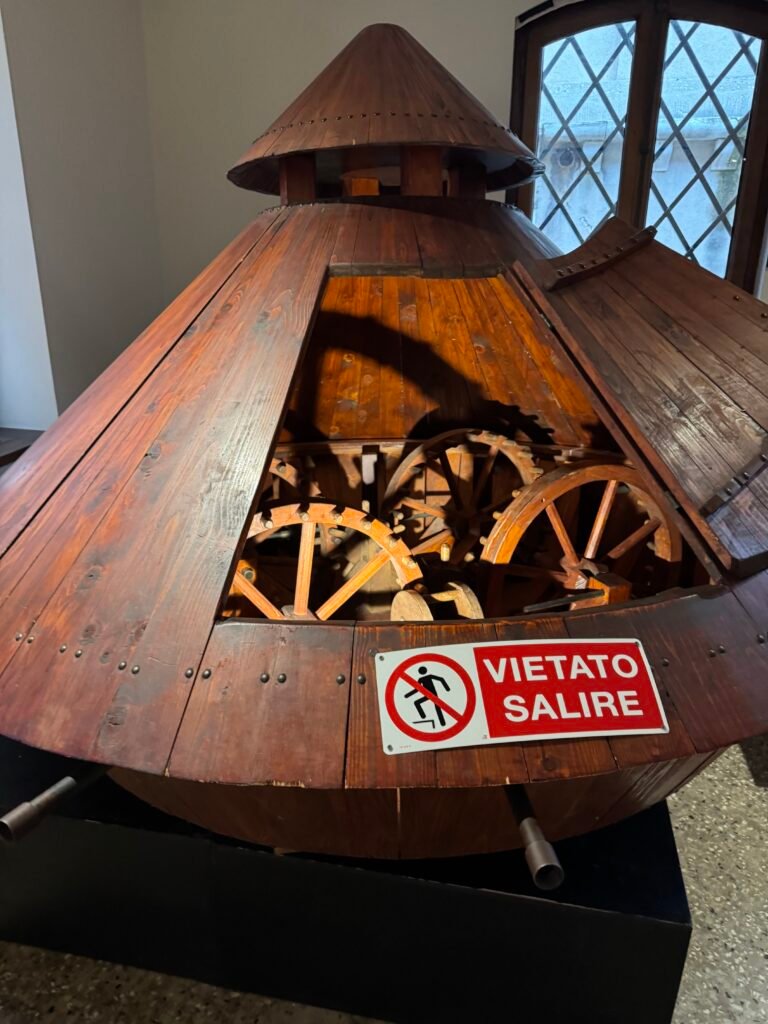
Da Vinci-engineered armoured fighting vehicle with the “do not climb up” sign at the Da Vinci Museum
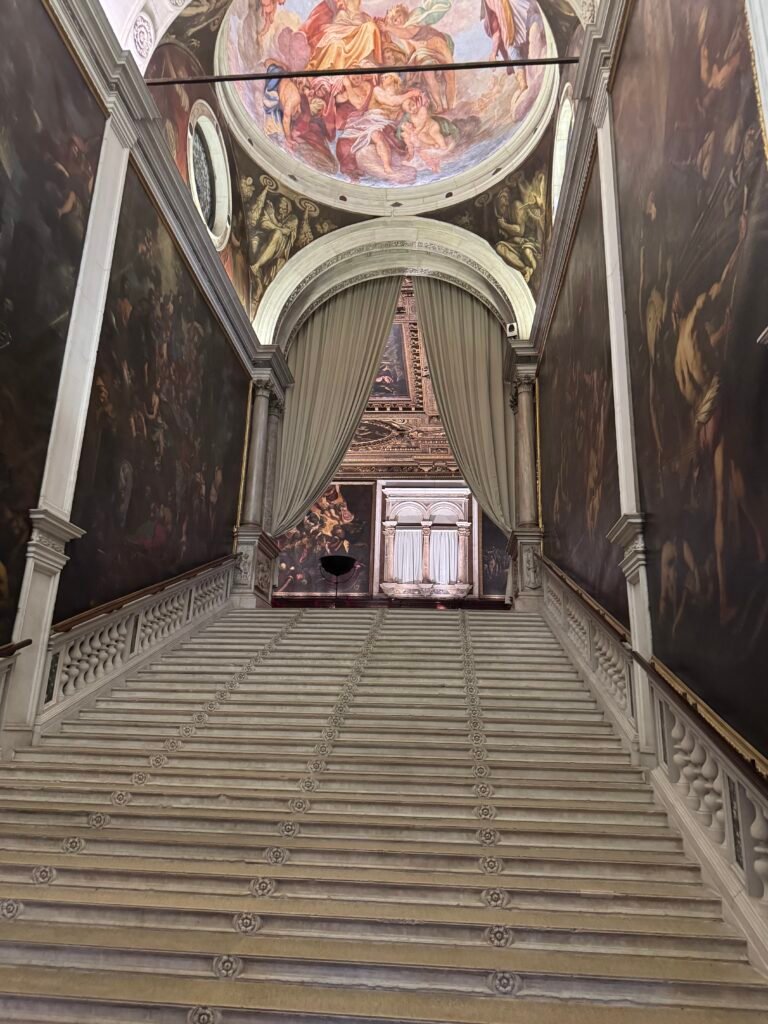
Grand staircase at Scuola di San Rocco
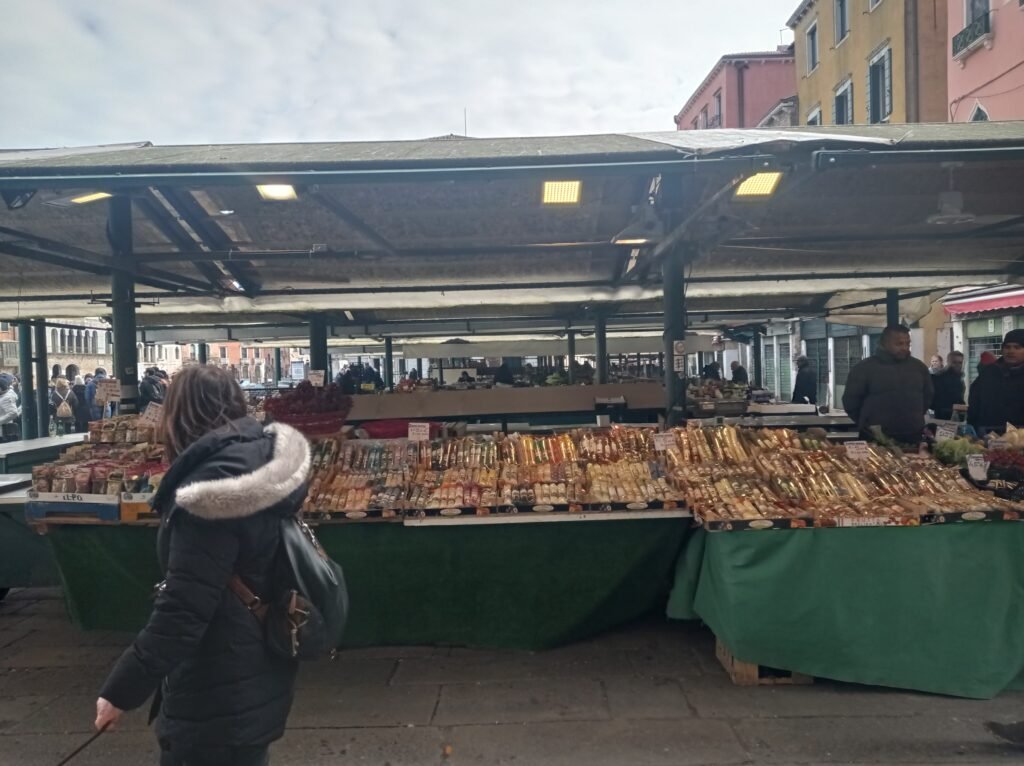
Rialto Market
San Marco
If you’ve visited Venice multiple times, you probably don’t need a refresher on San Marco.
If this is your first trip, however, San Marco is the sestiere you may want to avoid staying in — and here’s why.
San Marco is the most crowded and expensive part of Venice (tourist trap alert 🚨). It’s home to two of the city’s big three attractions — Piazza San Marco and the Doge’s Palace (with the Rialto Bridge being the third) — which means constant, heavy tourist traffic throughout the day.
Restaurants and cafés in San Marco tend to charge premium prices, and many travelers report that the food and drinks are mediocre at best. If possible, book your meals elsewhere in Venice — your wallet and taste buds will thank you.
As for sightseeing, Piazza San Marco and the Doge’s Palace need little introduction. If you want undeniable proof that you’ve been to Venice — the kind you can proudly show family and friends — these are the places to visit (and photograph extensively).
That said, even San Marco has quieter corners if you know where to go. Spots like Scala Contarini del Bovolo and Bacino Orseolo offer a brief escape from the crowds and a more intimate side of the district and Viennale HQ.
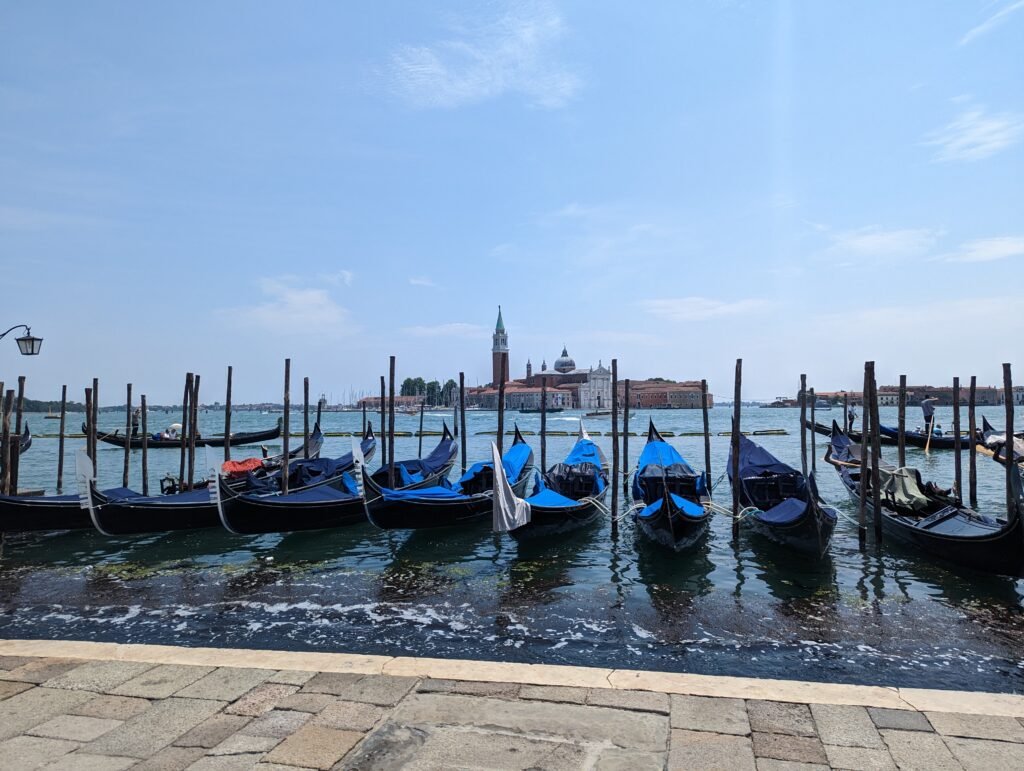
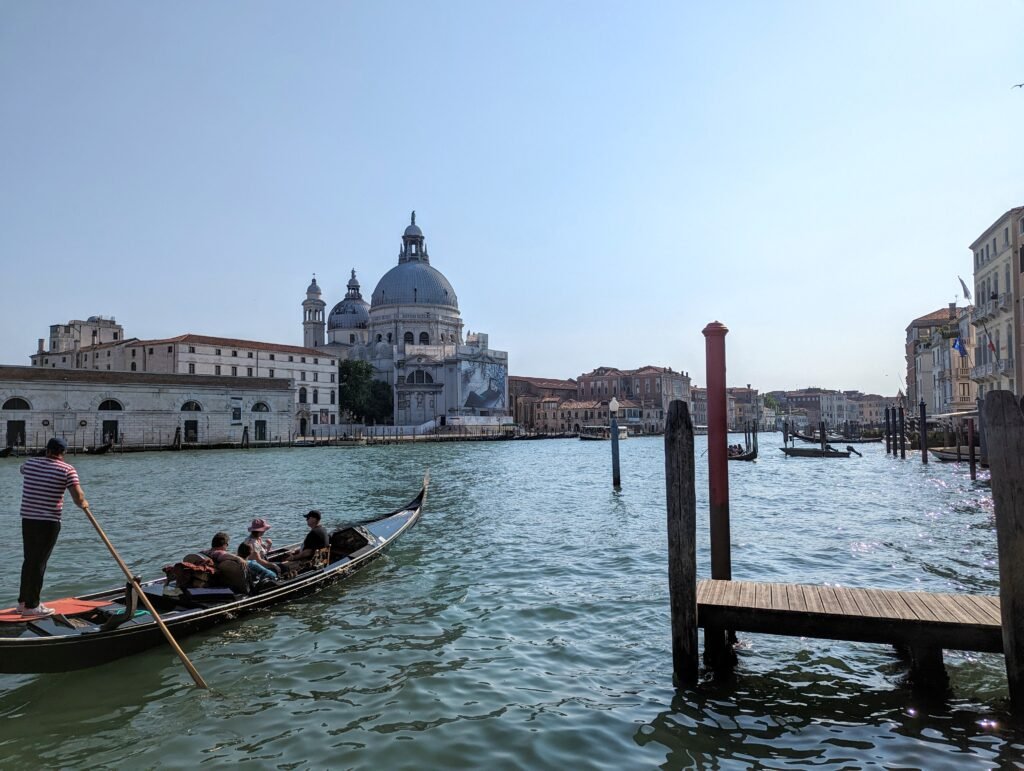
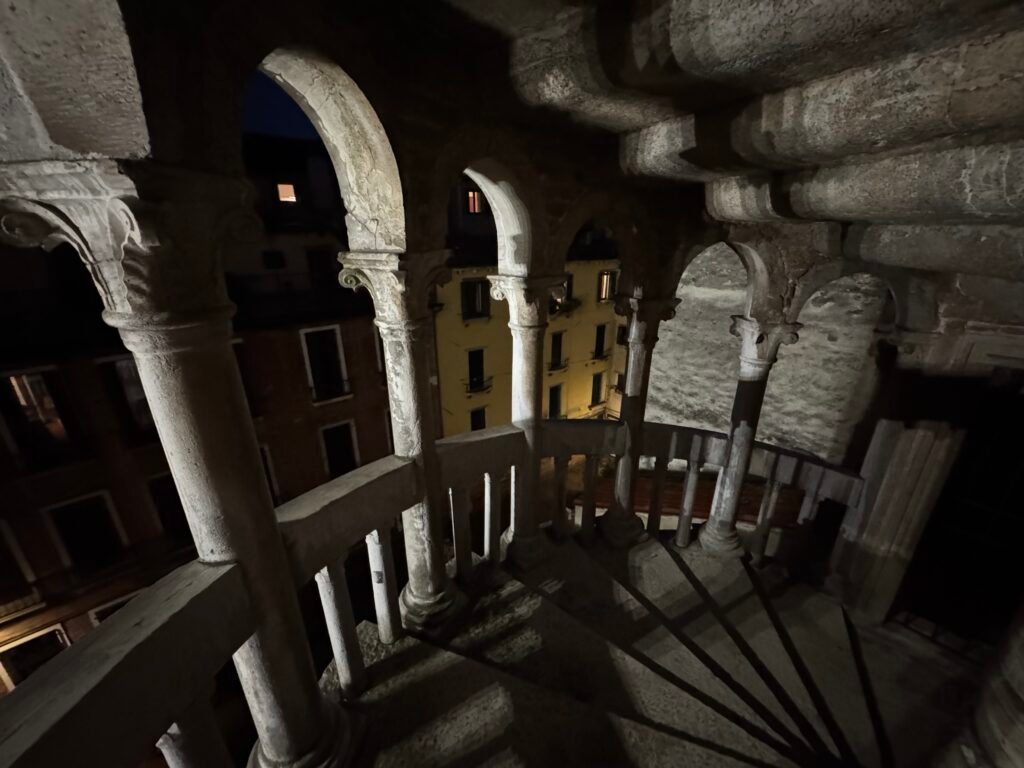
Scala Contarini del Bovolo
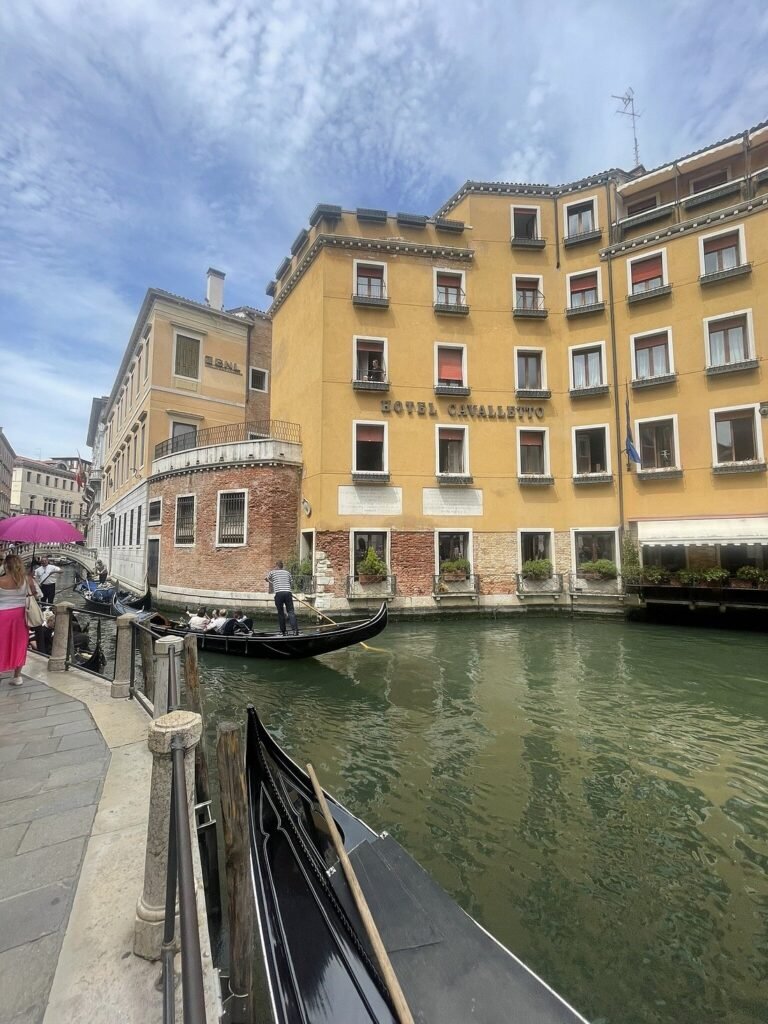
Bacino Orseolo Photo: Tripadvisor
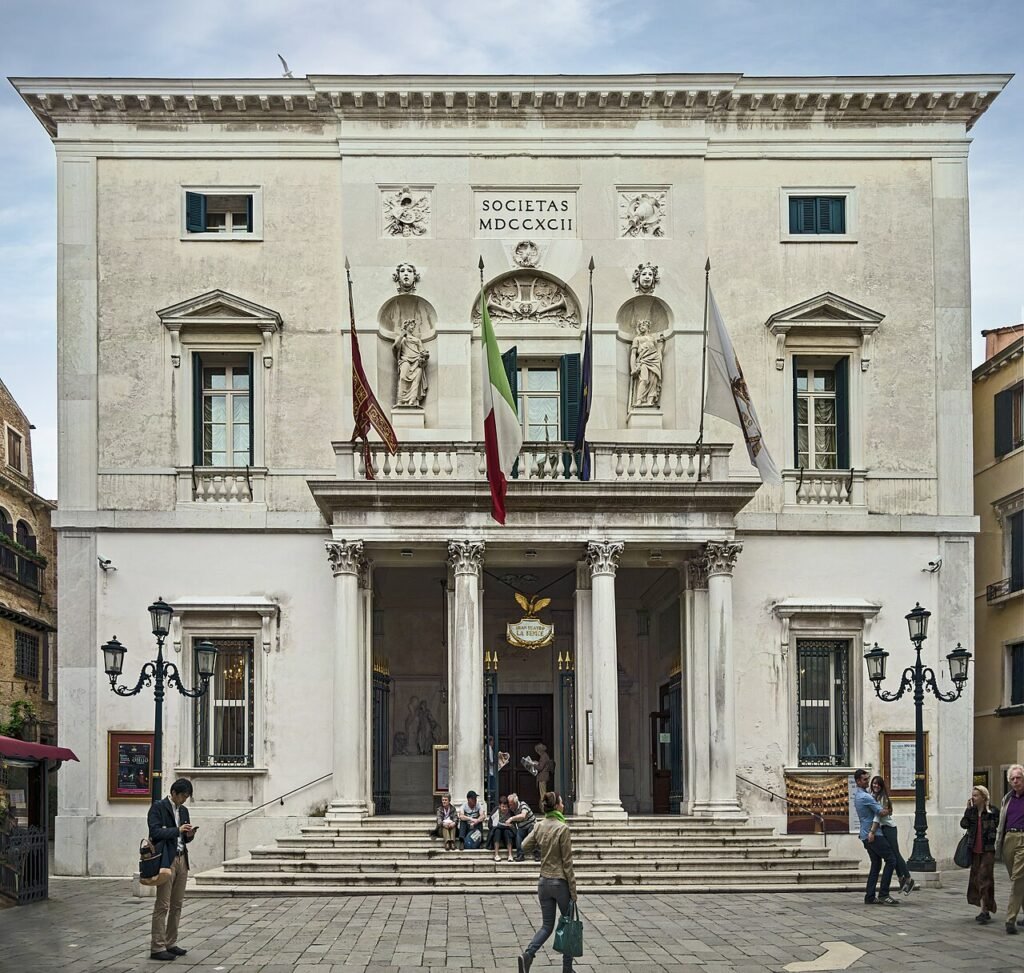
Castello
You may need to take a vaporetto to reach Castello, the easternmost sestiere of Venice, if your accommodation isn’t already there. But the rewards of exploring Castello are well worth it: you’ll be immersed in authentic local life, far removed from the crowds of San Marco. Your vaporetto ticket will more than pay for itself (and you might want to thank me later—haha).
Yes, local is the key word here. Restaurant prices in Castello have always been reasonable, and the food quality is consistently top-notch. If you’re craving authentic Venetian cuisine, be sure to book a table at one of the area’s reputable trattorias.
If you’re looking for a touch of nature in Venice, Giardini della Biennale and the island of Sant’Elena are perfect escapes. Traveling with kids? The Arsenale’s extensive maritime collection is well worth a visit. A private tour can take you through Venice’s historic military base and even allow you to visit the training submarine Enrico Dandolo—named after the very man who led the 1204 Crusade to Constantinople.
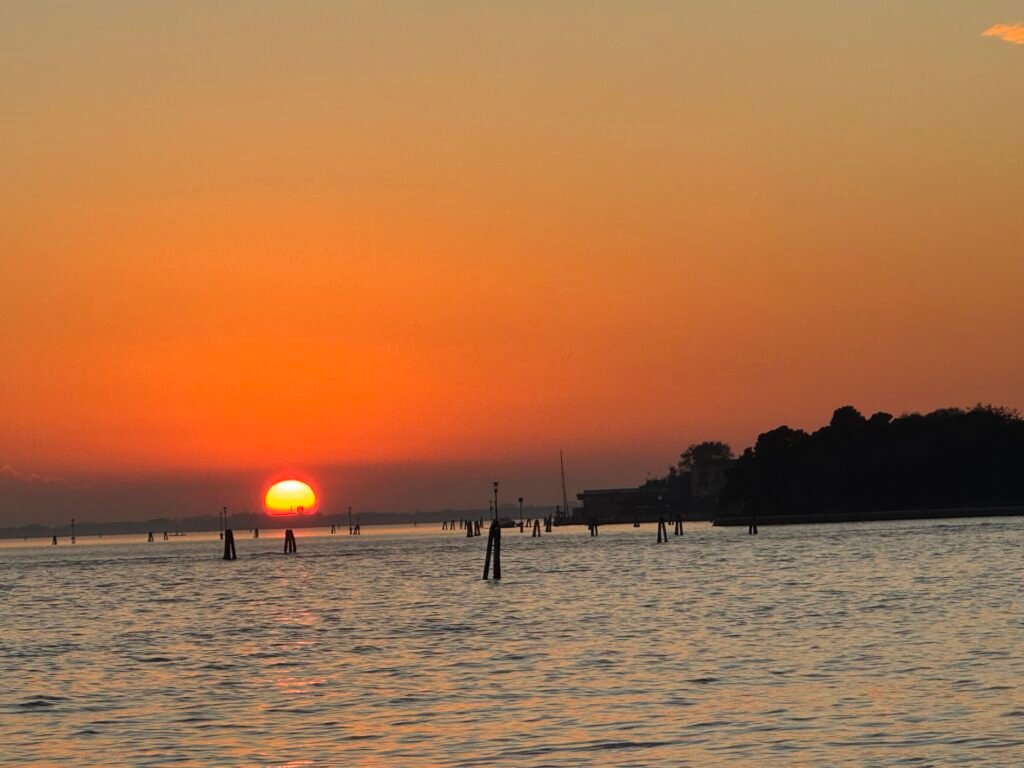
Sunset photographed from Giardini di Biennale
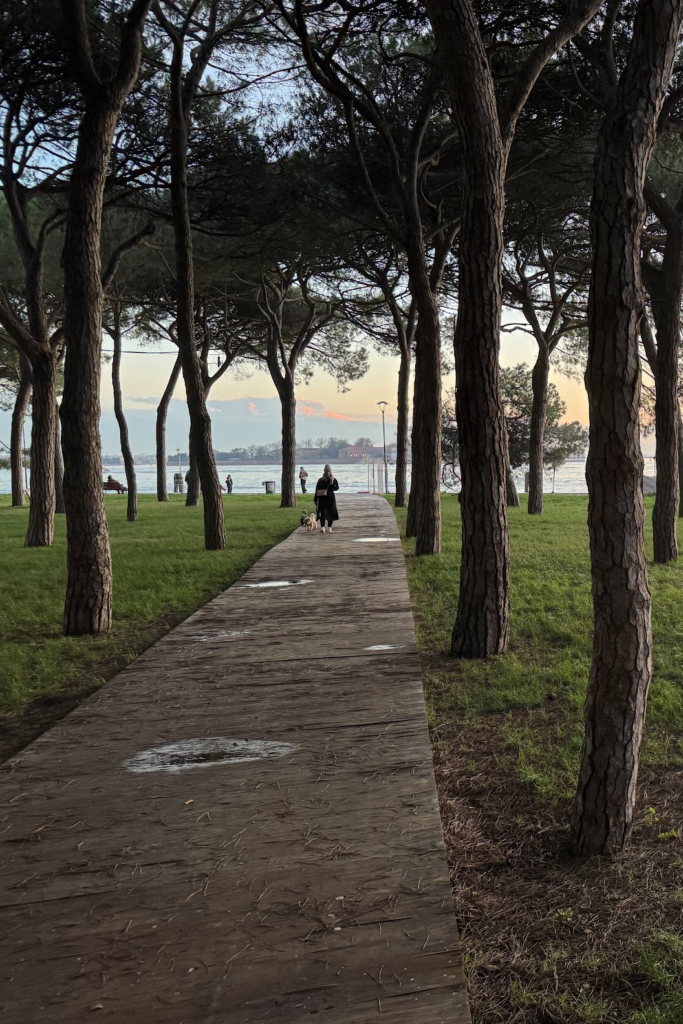
Sant’Elena
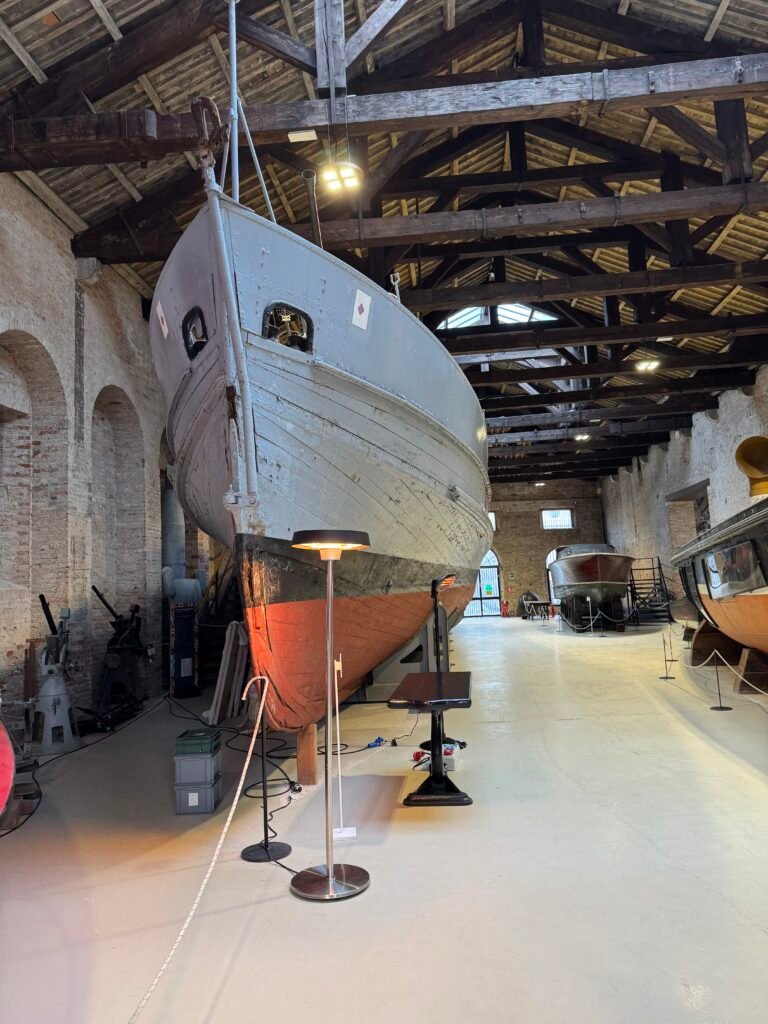
Arsenal Dockyard
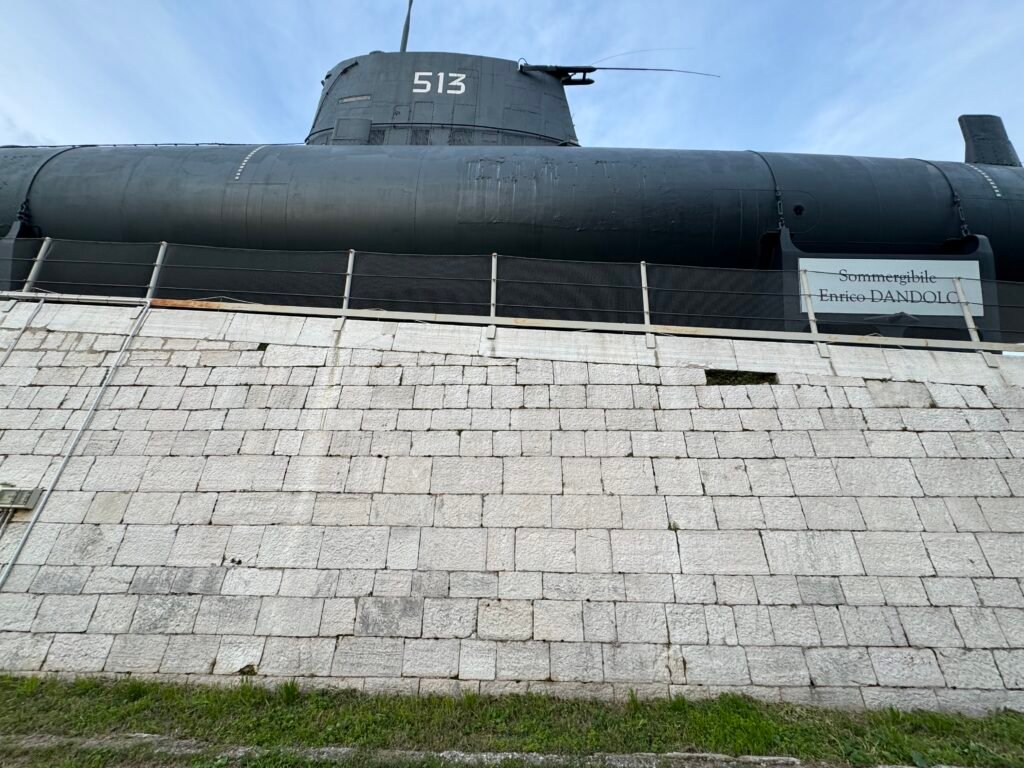
Submarine Enrico Dandolo
Leave a Reply