Very, very long ago, Ravenna took center stage in both Roman and Byzantine history.
Ravenna even served as the capital of the Western Roman Empire during its final years. After the empire fell, the Byzantines reclaimed the city from the Gothic kings who had taken over the former Western Roman territories.
To this day, the Byzantines have left their mark through magnificent churches and breathtaking mosaics. In 2026, Ravenna still welcomes travelers eager to admire its Byzantine architecture. Most of these monuments were built during the reign of Justinian I, although the Goths also left behind several palaces that are open to visitors.
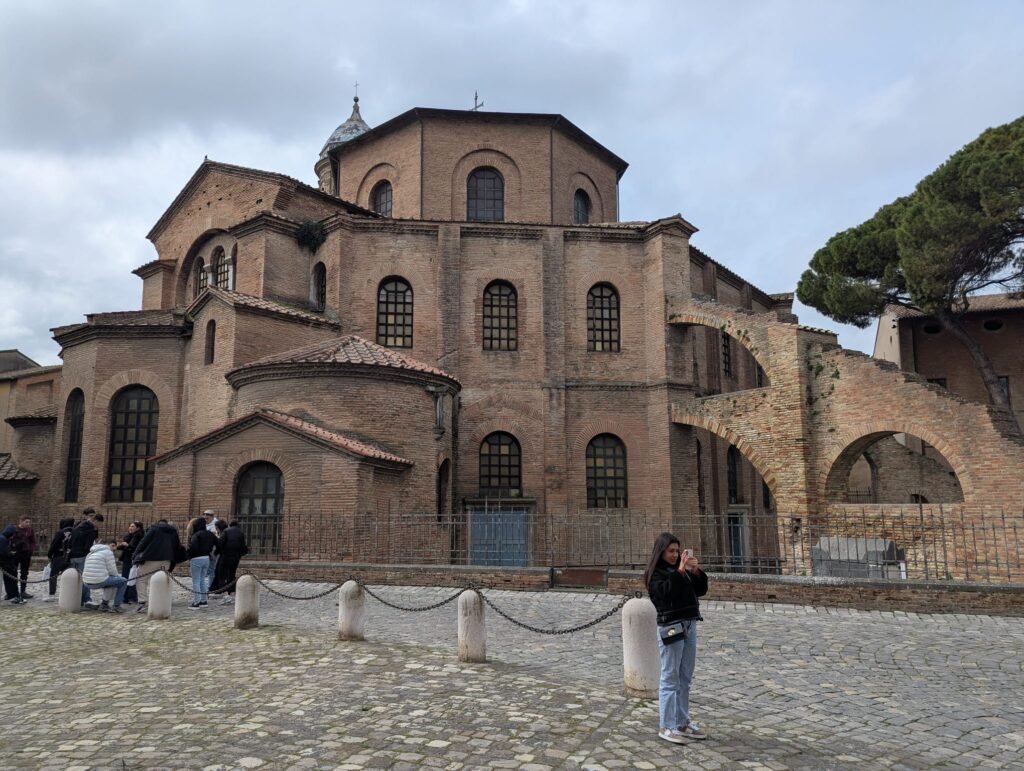
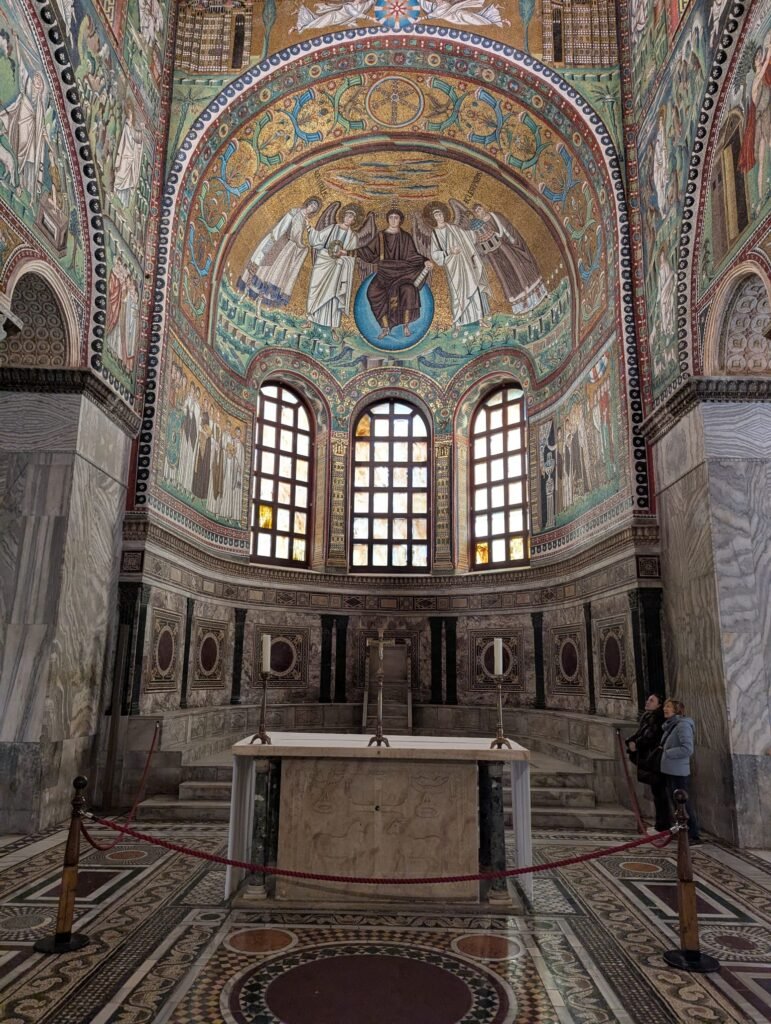
St. Vitale
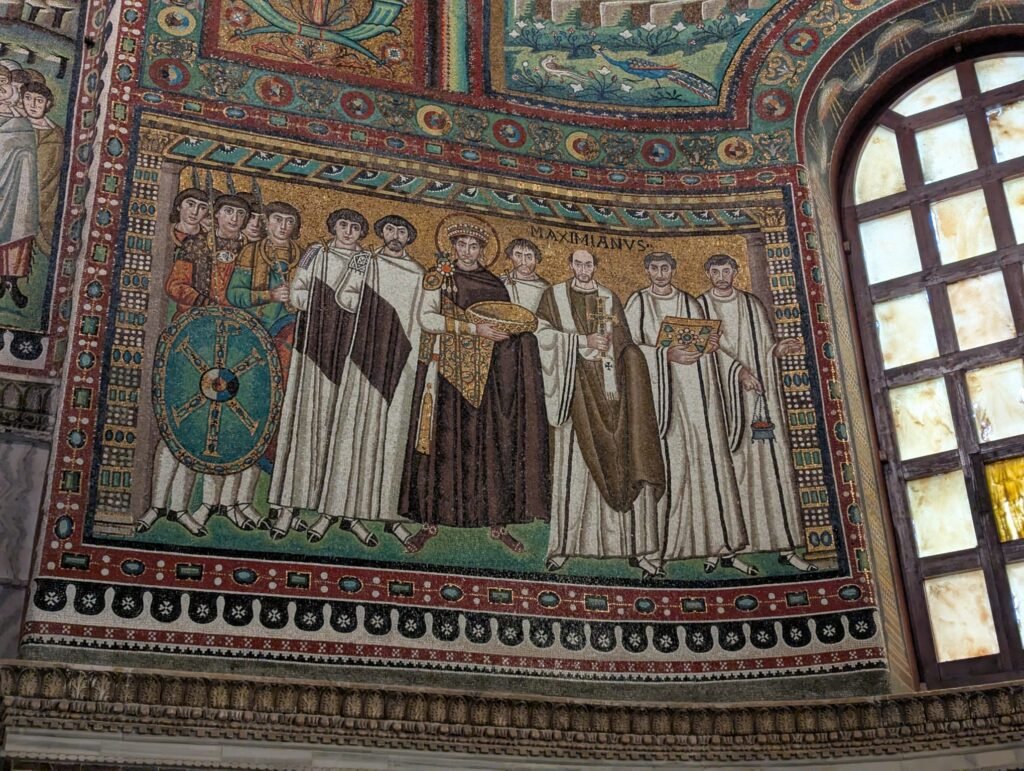
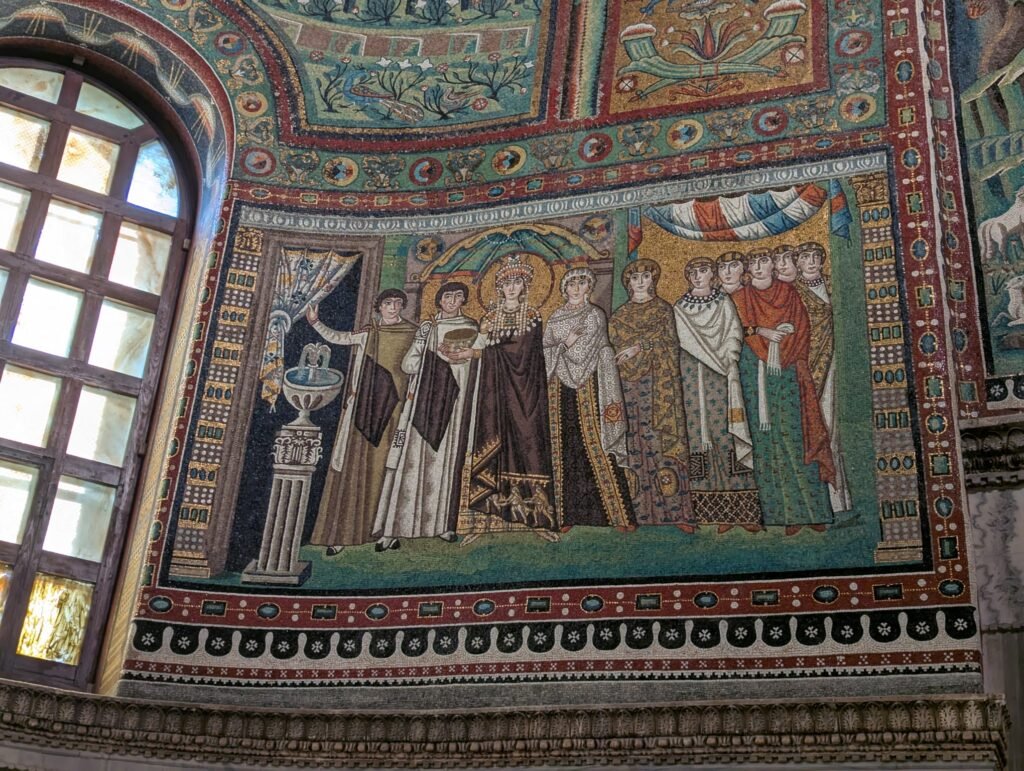
If you’ve ever come across the famous mosaics of Justinian I and Theodora online, there’s a 100% chance they were photographed inside St. Vitale. If you’re even remotely interested in the Byzantine Empire, you won’t want to miss them.
They’re surprisingly hard to miss once you step inside the basilica. Just look past the rows of chairs, or simply follow the crowd of tourists trying to get the perfect photo near the altar.
Once you’ve found them, take a deep breath and appreciate the fact that these mosaics survived centuries of history. Just so we can still stand here and admire their beauty.
St. Apollinare Nuovo
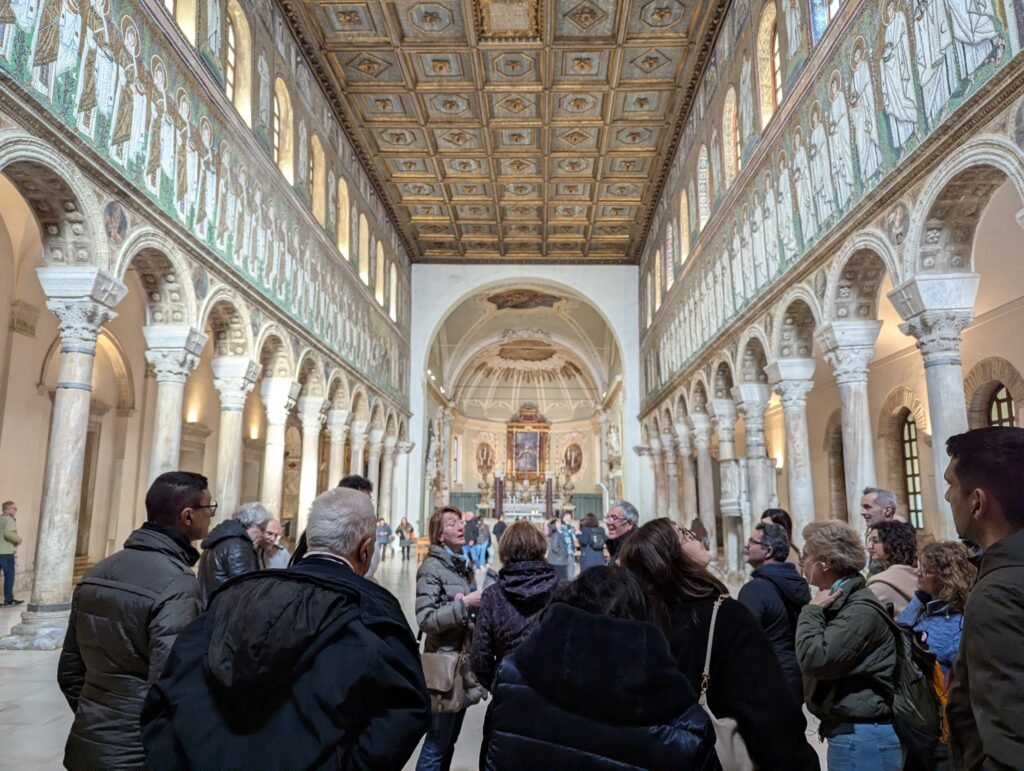
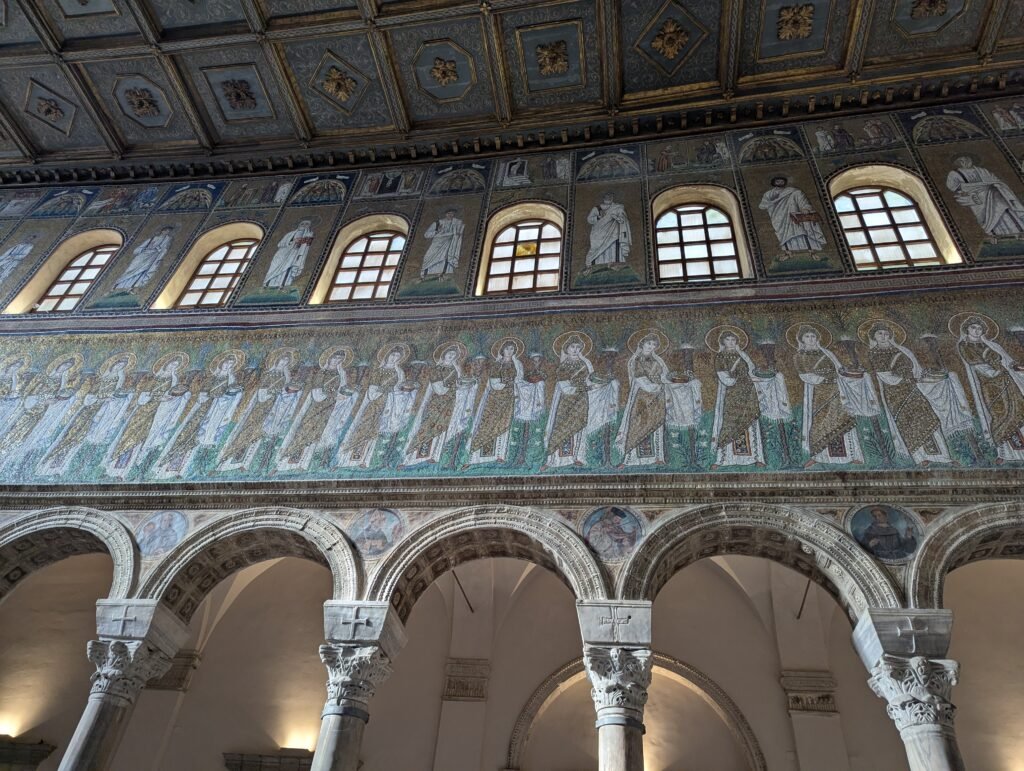
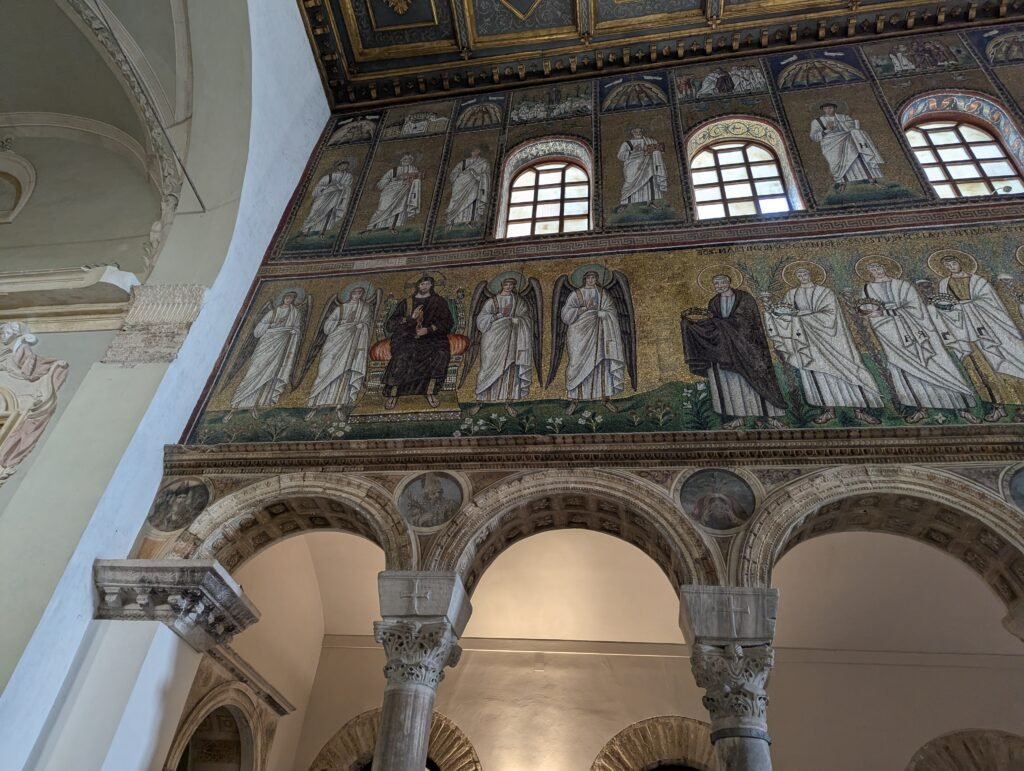
Here, you’ll be greeted by a royal procession of ladies-in-waiting dressed in Late Antique attire, alongside the long-lost Gothic Palace and a portrait of Justinian I. Legend has it that the portrait originally depicted Theodoric the Great before it was altered to portray Justinian following the Byzantine conquest of Italy.
All of it is rendered in shimmering gold mosaics that almost feel too beautiful to be real.
Mausoleum of Galla Placidia
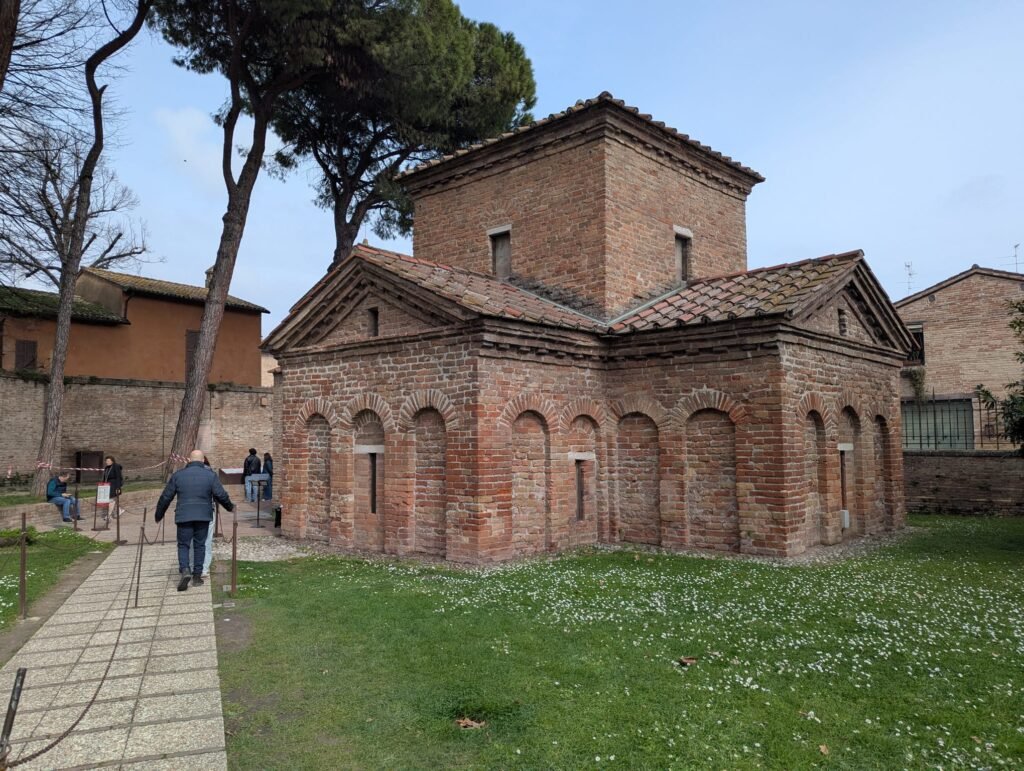
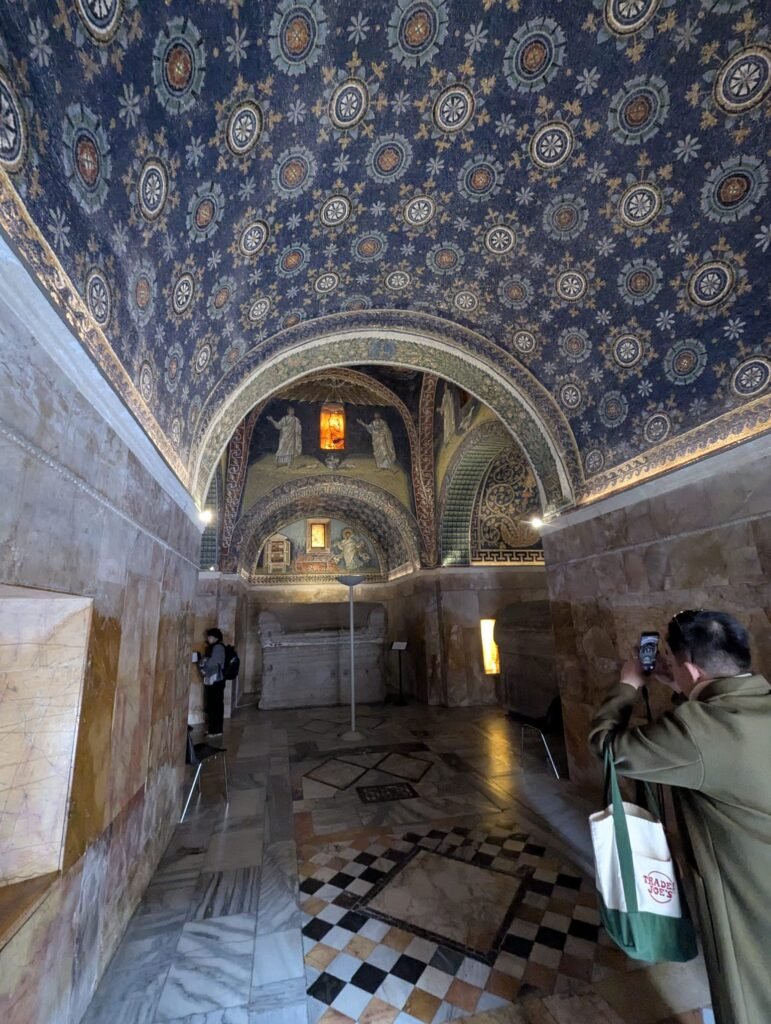
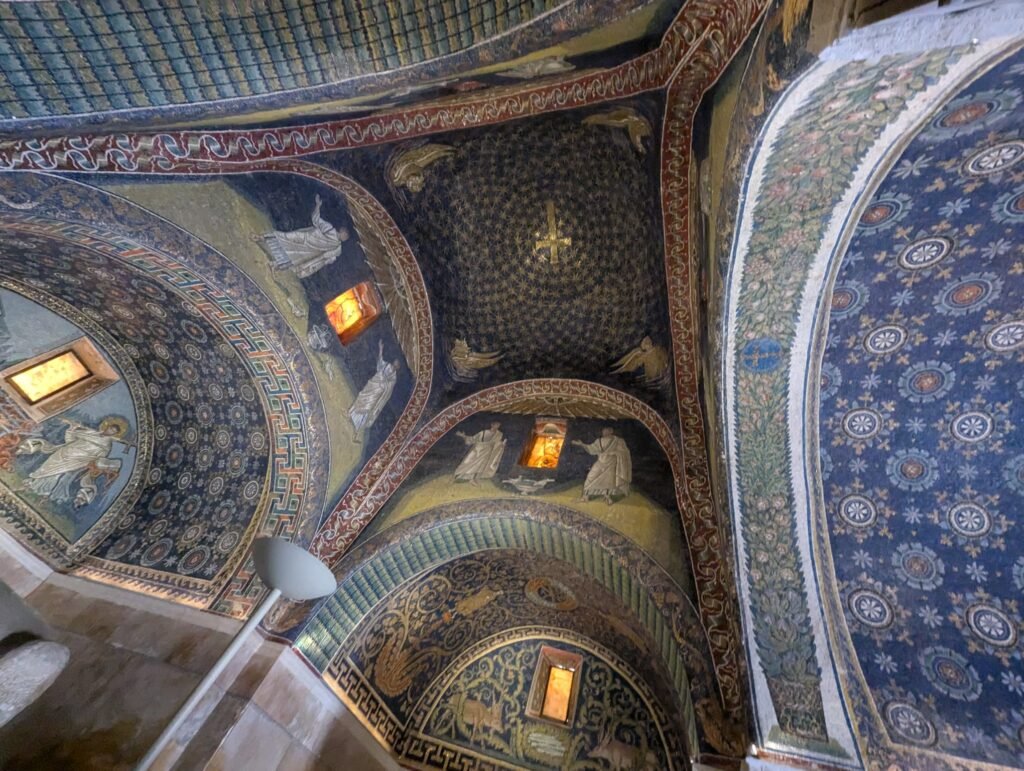
Named after the Roman Empress Galla Placidia, this mausoleum features a breathtaking interior, with deep blue and golden mosaics decorating the ceiling in the form of a starry sky filled with Christian symbolism. Conveniently, it’s located on the same grounds as St. Vitale.
St. Andrew’s Chapel
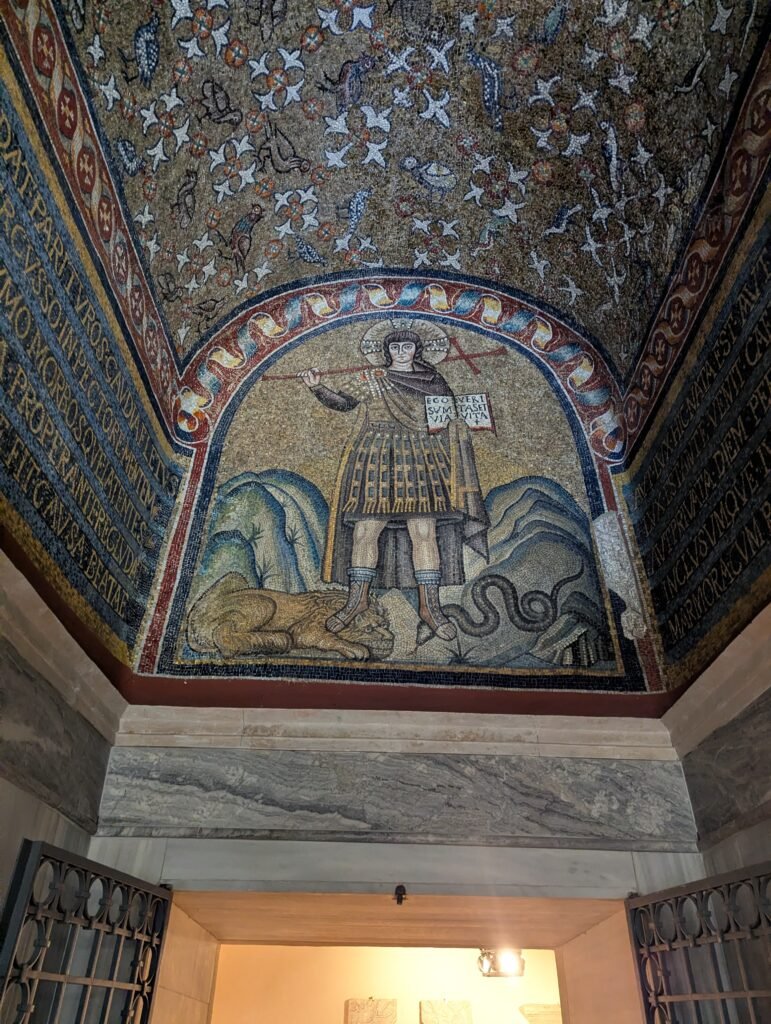
You’ll need to enter the Archiepiscopal Museum to reach this chapel. The atmosphere is quite similar to Galla Placidia’s, with its dark blue and golden ceiling mosaics. It also features an impressively detailed mosaic of a soldier with long hair and early medieval armor. The chapel itself is about half the size of Galla Placidia.
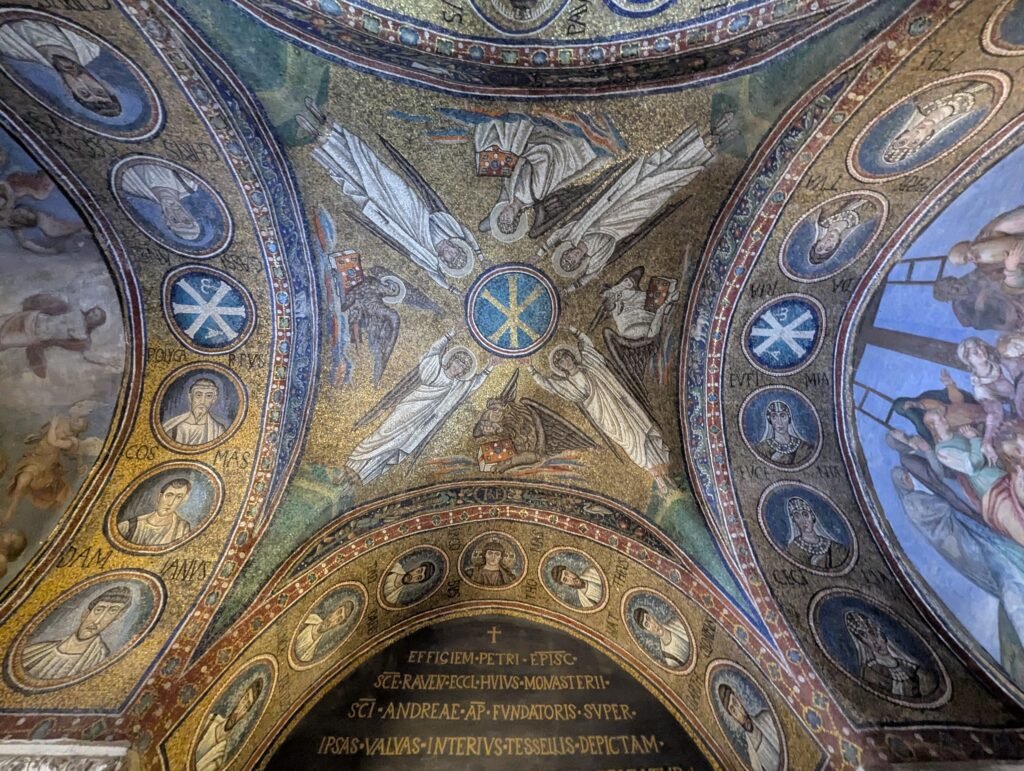
I’m not criticizing the chapel by pointing all this out. Quite the opposite. You should absolutely visit it and let its celestial mosaics blow your mind. I love how the limited sunlight allows the mosaics to shine, making the chapel feel like a hidden sanctuary with only a tiny window connecting it to the outside world.
Baptistery of Neon
If St. Andrew’s Chapel feels like a secret hideout, then the Baptistery of Neon is the place everyone knows about. In other words, expect plenty of fellow tourists.
Don’t worry, though—the mosaics here won’t disappoint.
St. Apollinare in Classe
Located just outside Ravenna, this basilica is easily reached by bus or train. Simply get off at Classe: Google Maps is your best friend.
The overall atmosphere is very similar to the other churches in Ravenna, but the apse mosaic is every bit as spectacular as the one in St. Vitale. In fact, the depiction of Heraclius follows a composition remarkably similar to Justinian I’s famous mosaic.
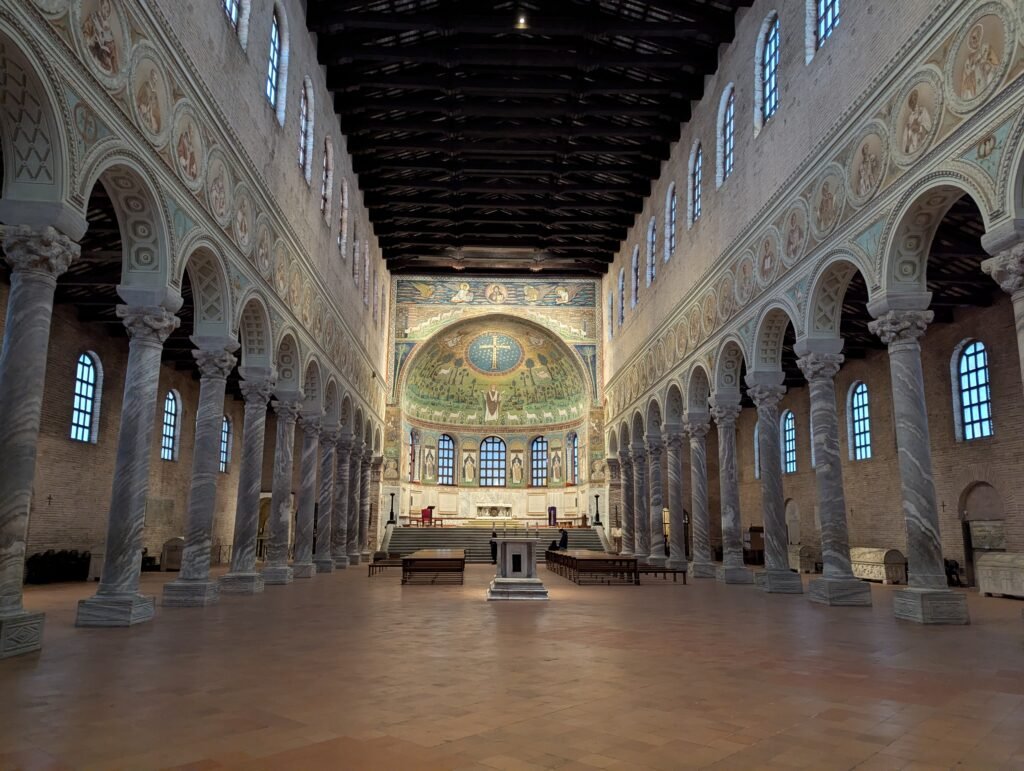
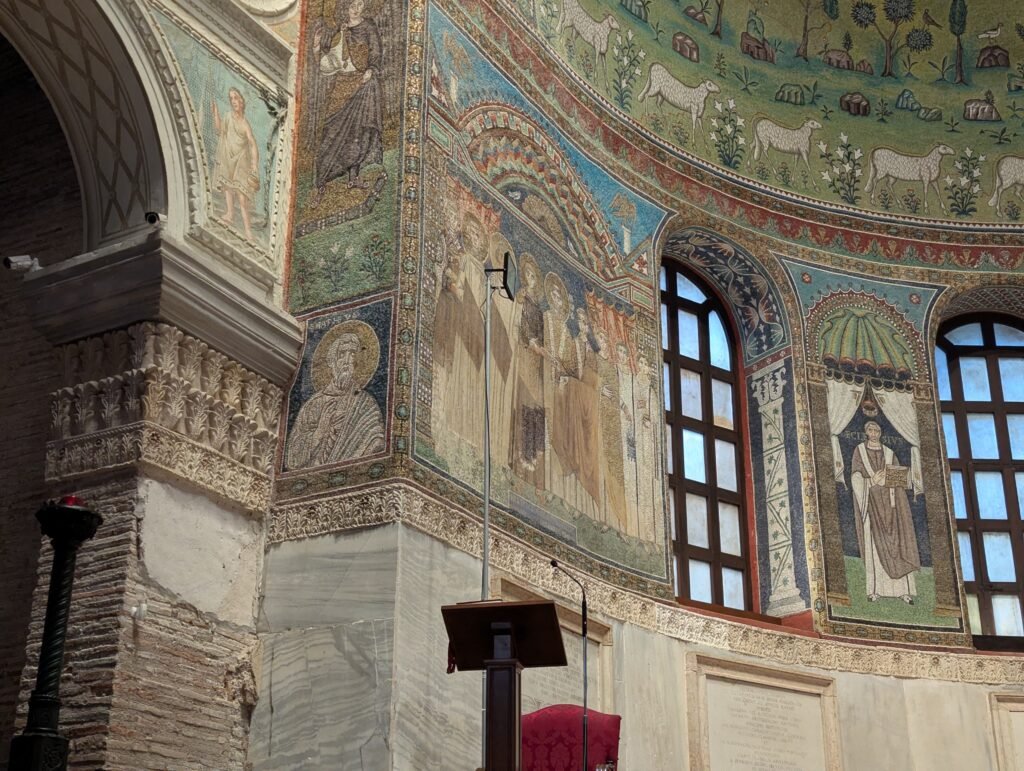
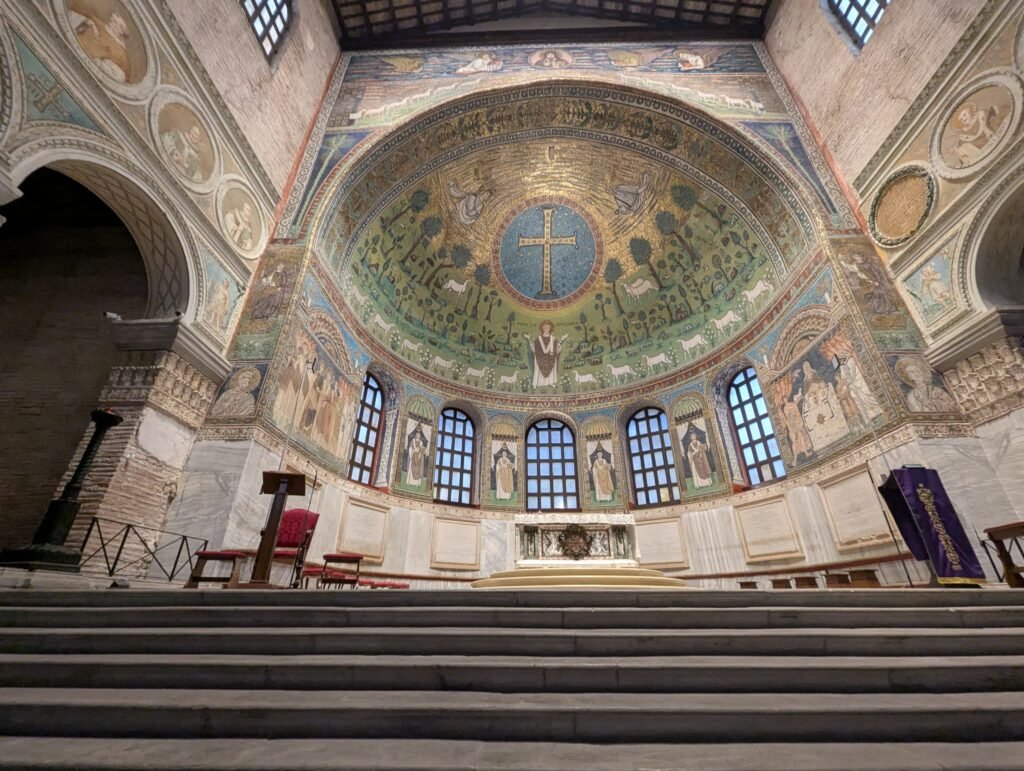
Perhaps because it’s slightly outside Ravenna, you’ll encounter fewer crowds, but you’ll enjoy mosaics every bit as grand as those in the city’s busiest churches.
Leave a Reply