A chapter in a book about Nurbanu Sultan first brought me to Türkiye, opening a door to its beautiful heritage, vibrant media landscape, and fascinating cultural melting pot. I started watching video clips from Muhteşem Yüzyıl (Magnificent Century) and its spin-off, as well as Uyanış. I soon began recognising familiar faces from these historical dramas in the dizis set in the 2010s.
Before long, I was watching those contemporary dizis myself, including Fatmagül and Kara Para Aşk (Black Money Love). Along the way, I discovered actors who had yet to appear in period dramas. Engin Akyürek, I am looking at you! 😊
Then Instagram introduced me to another period dizi: Aşk ve Taht. One day, I came across a picture of Akın Akınözü in full regal Sultan attire, complete with long hair, hair extensions, and a thick beard. Curious, I read the caption and immediately spotted Merjem Šiljak, also dressed in gorgeous princess attire. Her beautiful face and blonde hair struck me like a thunderbolt!
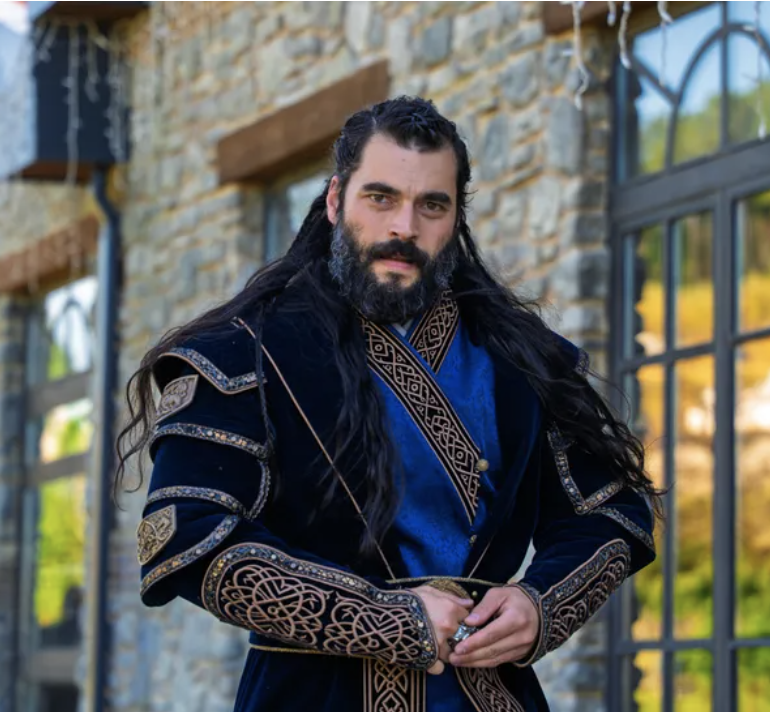
Akin Akinözü, starred as Alaeddin Keykubad I
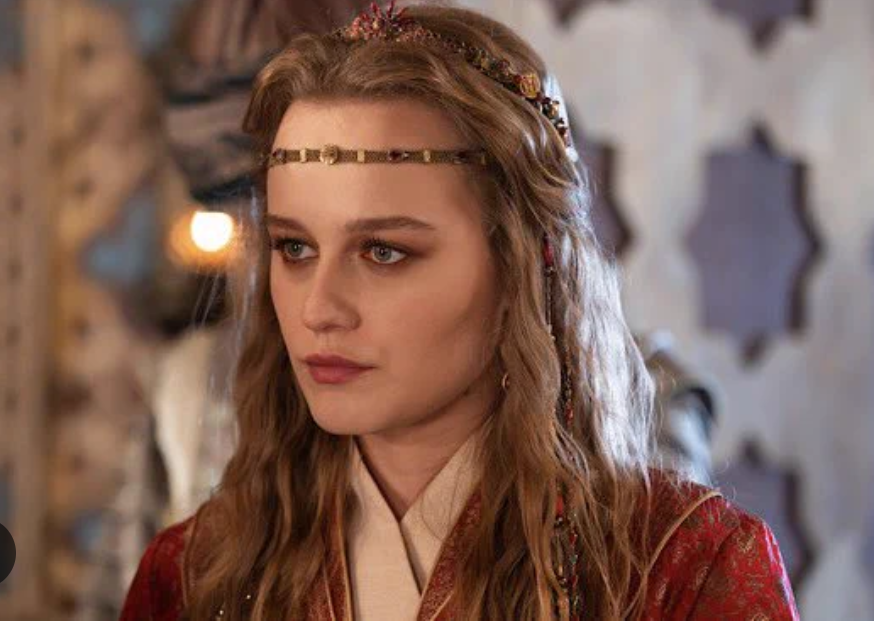
Merjem Šiljak as Princess Destina (Hunad Mahperi Hatun)
I haven’t watched a full episode of Aşk ve Taht. So far, I have only seen short clips and snippets here and there. Nevertheless, I was drawn into its world, and then came the devastating news: the series would reportedly be cancelled after just five episodes because of extremely low ratings.
Like many other fans who begged the production team not to end the series, I joined in, leaving comments on the official Aşk ve Taht channel and pleading for the show to continue.
As of today, fake AI-generated accounts have been posing as the official Aşk ve Taht account, posting countdowns to the supposed final episode. The comment sections are filled with fans expressing their despair, confusion, and frustration.
Fortunately, for those of us hoping the series will continue, the official channel has yet to announce its definitive ending. However, pictures and Instagram Stories have shown that Akın Akınözü has already left the set. He even shared a farewell message with the crew and visited his usual hairdresser to get rid of his long hair and thick beard.
He no longer looks like a regal Sultan, and many of us have taken these changes as a sign that the series is nearing its end. His farewell message passed to the filming crew, followed by his transformation back to his no-beard, short-hair appearance, certainly makes it feel as though the show could end at any moment. 🙁
So, why did Aşk ve Taht end prematurely?
Low Local Rating
Journalist Birsen Altuntaş was the first to report the premature ending of Aşk ve Taht, just one day after its third episode aired. She cited a rating of 1.62.
In Türkiye, it is common practice for television series with persistently low ratings to be cancelled early. However, this practice can be particularly disappointing for international fans, who may have only just discovered a show and become invested in its story.
Naturally, many of us have been speculating about what could have caused Aşk ve Taht to receive such low ratings. One important distinction is that domestic ratings primarily reflect television viewership in Türkiye, rather than the show’s international audience. Overseas fans may love a series, but their enthusiasm does not necessarily translate into the domestic ratings that influence a production’s fate.
For international fans like me, historical dramas offer a wonderful way to glimpse Turkish history while enjoying carefully crafted costumes, elaborate sets, and compelling storylines. Uyanış and Muhteşem Yüzyıl, including Muhteşem Yüzyıl: Kösem, attracted international audiences by immersing viewers in historical settings, period attire, and, at times, language and dialogue that evoke an earlier era.
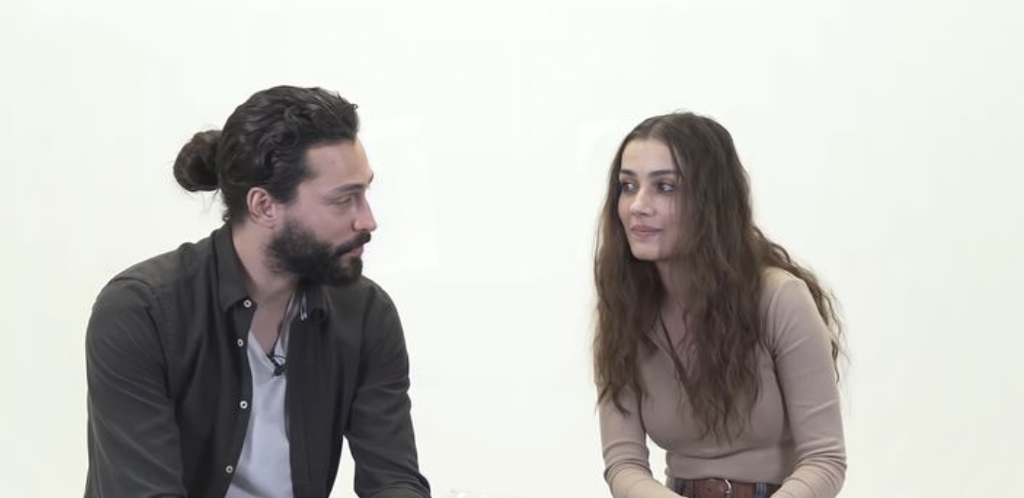
It seems to me that international audiences are also willing to embrace a youthful love story or a soap-opera-style romance, provided that the characters belong to a historical setting and wear period-appropriate attire.
Aşk ve Taht appeared to offer precisely that combination, and it succeeded in capturing the interest of viewers like me.
Unfortunately, the series did not seem to appeal to domestic audiences to the same extent, and its ratings suffered as a result. One possible explanation is that the producers failed to strike the right balance between romance and the historical achievements and legacy of Alā ad-Dīn Kayqubād I, one of the great rulers of the Seljuk Sultanate of Rum.
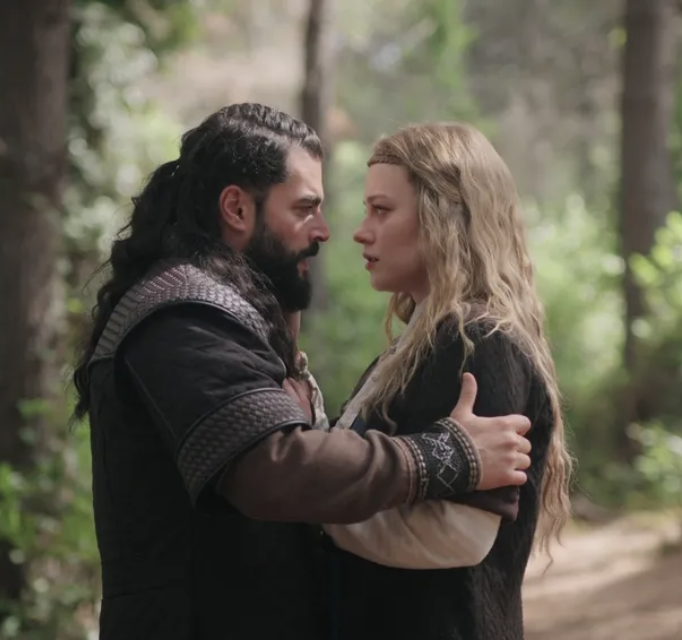
Romance took centre stage in Aşk ve Taht, potentially leaving viewers who wanted a more substantial historical narrative feeling disappointed. Picture: ATV
While international fans may have enjoyed the romantic storyline, many domestic viewers appeared to prefer other programmes. Among the series attracting attention were Sevdam Bir Ateş and Yeraltı, neither of which is a historical period drama. Both ranked #1 and #2 in the ratings during the period when Ask ve Taht was also aired.
Ultimately, the production of Aşk ve Taht may have struggled to reconcile the interests of its domestic and international audiences. The decision to end the series early followed a familiar pattern in Turkish television, but it potentially alienated international viewers who wanted the story to continue.
Lessons not learned from Kuruluş Orhan
As I mentioned earlier, Aşk ve Taht was competing against highly rated contemporary dramas. With such fierce competition, its chances of survival were already uncertain.
However, competition was only one part of the problem. Viewers also criticised what they saw as a repetitive approach to historical storytelling, particularly the reliance on familiar romantic plots.
Another historical drama, Kuruluş Orhan, faced similar criticism earlier this year. I haven’t watched even a single clip from the series, but some fans complained about the love triangle involving Asporça Hatun and Nilüfer Hatun, two women associated with Sultan Orhan I.
Some viewers felt that this romantic rivalry reduced the historical drama to a conventional soap opera and, in their opinion, undermined the image of Orhan I as a historical figure.
Their criticism echoes the point I made earlier: some viewers want historical dramas to highlight the achievements, political struggles, and legacies of the people who shaped the past. They do not necessarily want to see history reduced to a love triangle dressed up in period costumes.
Kuruluş Orhan concluded after its first season, and the parallels with Aşk ve Taht are difficult to ignore. Fans sighted the same set in Ask ve Taht which was also used in Bozdag Film’s other projects like Diriliş Ertuğrul.
Even more strikingly, the two productions share a producer.
When news of the early ending of Aşk ve Taht began circulating, one fan remarked that the series should never have had the word Aşk (love) in its title. The suggestion was that the title itself might have discouraged some viewers from giving the series a chance.
Other fans expressed the view that the show’s fate had been predictable from the beginning.
Their comments pointed to what they considered a failure to learn from previous mistakes, particularly the criticism surrounding Kuruluş Orhan. In their eyes, the producers had repeated the same formula without adequately considering what the domestic audience wanted from a historical drama.
The lessons were not learned and the educated local fans grew tired of it.
Silver Lining
As fans, many of us had already begun to suspect that Aşk ve Taht would come to an abrupt end. The comment sections on the official channel became a mixture of disappointment, criticism, and praise.
Some viewers complained about the overused harem plots and romantic storylines. Others praised the performances of Halil İbrahim Ceyhan, who played General Andreas.
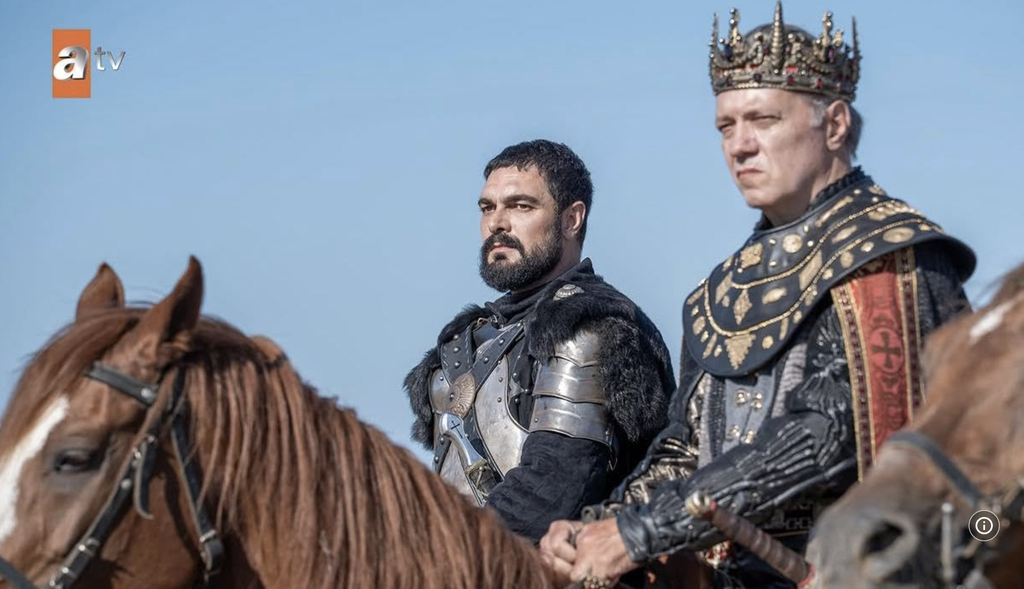
Andreas (left) portrayed by Halil Ibrahim Ceyhan
One of them said the lead actor should have been Halil Ibrahim Ceyhan .. To be fair Akin Akinözü has done his part as a lead actor, just like all the actors and actresses did. The cast had been wonderful to me. I only saw the failure in the flawed storyline.
The online community kind of agreed that the silver lining was Halil Ibrahim Ceyhan aka Andreas .. For me it was my wanderlust to travel to Konya. The series was mostly set to this city where it was once Seljuk capital in Alā ad-Dīn Kayqubād I’s time. A period drama makes want me to travel. Always.
And if any member of the cast rises to greater prominence in the future, I may return to this blog post with an update. Unill then bye for now.
Leave a Reply